
01
As-Forged Bar
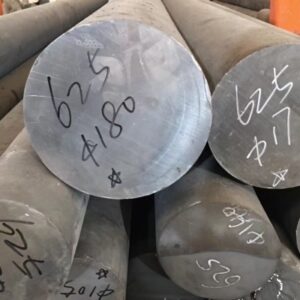
Hot-forged rounds from 100 to 300 mm left in the forging skin for rough machining.
Request Availability →Hot-forged UNS N06625 bar in large sections for rings, flanges and heavy machining.
Inconel 625 forged bar carries a worked structure, because hot forging breaks up the cast grain of the ingot.
Specifically, forging reaches diameters that rolling cannot, so heavy parts start from one solid piece.
Therefore, the EN 10204 3.1 report shows the mechanicals of the delivered forged bar condition.
Inconel 625 forged bar is UNS N06625 bar hot-forged above recrystallisation into the ordered section. Forging closes porosity and refines the grain, and the solid-solution matrix stays non-magnetic and weldable behind that worked structure.
In addition, we supply this forged bar to ASTM B446 in Grade 1 and Grade 2, and the ASTM B564 forging route covers flanged blanks and ring stock where the order needs them. AMS 5666 answers aerospace orders that name it.
| Quick Spec | Range |
|---|---|
| Standard | ASTM B446 / ASME SB446, B564 forging route, AMS 5666 |
| Condition | Grade 1 annealed or Grade 2 solution annealed |
| Diameter | 100–300 mm forged, larger on request |
| Tolerance | Forged band, peeled or machined to size |
| Tensile, min. | 827 MPa (120 ksi), Grade 1 |
| Surface | As-forged, peeled or rough machined |
| Certificate | EN 10204 3.1, 3.2 on request |
Meanwhile, the Inconel 625 Bar and Rod hub places this forged bar beside the other bar forms, and the European designation NiCr22Mo9Nb refers to the same UNS N06625 alloy.
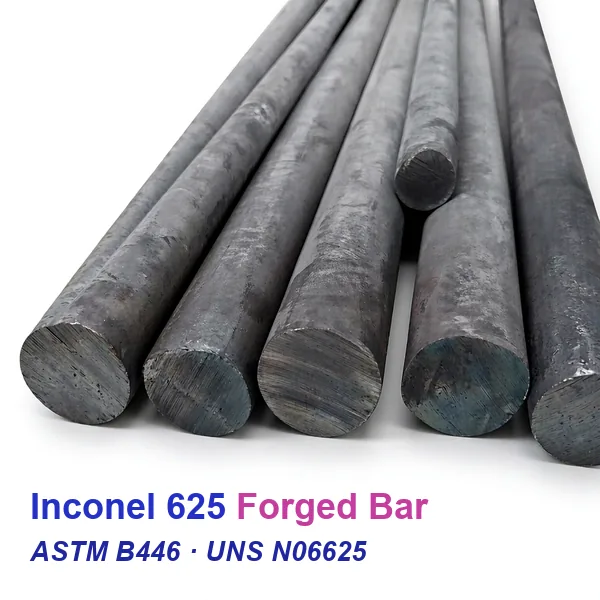
Inconel 625 forged bar is UNS N06625 bar hot-forged above recrystallisation into large sections that rolling cannot reach. Forging breaks up the cast structure, so rings, flanges and heavy machined parts start from sound, tested stock. Southerly Alloy supplies and exports this forged bar to 300 mm diameter and beyond, with EN 10204 3.1 certificates on every shipment.
Forging refines the grain, so Inconel 625 forged bar answers ultrasonic testing more cleanly than cast stock.
Grade 1 forged bar holds a certified 827 MPa (120 ksi) tensile minimum at 30% elongation up to 101.6 mm.
Specifically, ring and flange blanks can follow the ASTM B564 forging route on the same heat.
In particular, 20 to 23% chromium and 8 to 10% molybdenum resist pitting in seawater and acid duty.
Moreover, fabricators weld Inconel 625 forged bar without preheat and usually skip post-weld heat treatment.
Forged bar keeps dependable properties from sub-zero service up to about 980 °C in gas paths.
Each forged bar lot carries one heat number, so the certificate maps to the physical stock.
In fact, Inconel 625 forged bar ships in cut discs or full lengths as the machining plan needs.
Ordering forged bar means fixing the section and the test plan together, because large sections need honest proof. Southerly Alloy names both in the offer sheet before melting starts.
We write the forged bar diameter, the test locations and the grade into the offer before melting.
Consequently, forged stock answers ultrasonic inspection where rolled large bar would struggle.
In addition, the certificate notes whether the blank followed the B446 bar route or the B564 forging route.
Quotations for Inconel 625 forged bar include the packing list, mill certificate and export documents.
One melting route feeds every forged bar section, and the forge press then sets the structure and size. Because molybdenum and niobium drive the corrosion performance, melt control for this forged bar matters as much as the forging plan.
Weighed nickel, chromium, molybdenum and niobium enter the melt that becomes this forged bar order.
Vacuum induction melting holds the UNS N06625 chemistry inside the ASTM B446 window on every forged bar heat.
Where the order asks for it, electroslag remelting cleans the heat, and the certificate states the route.
Press forging breaks up the cast structure of the ingot and closes porosity in the same pass.
The forged bar anneals at 871 °C minimum or solution anneals at 1093 °C minimum, as the grade requires.
Finish forging brings the bar to its ordered diameter band before the final anneal.
Finally, we gauge forged bar diameter, soundness and surface before the lot ships.
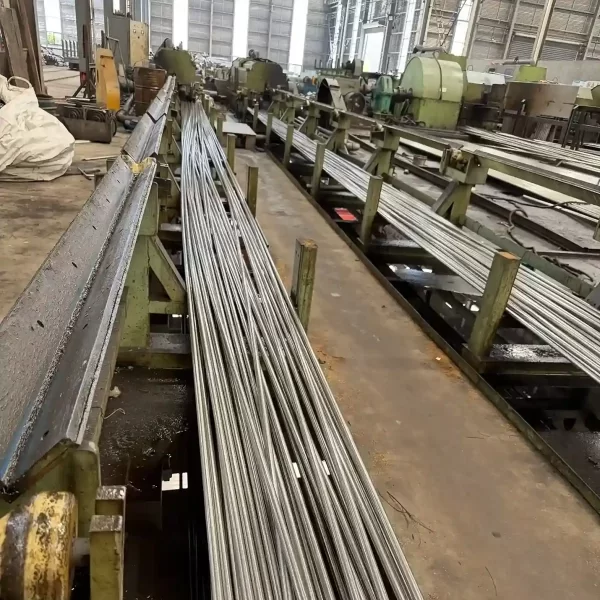
Southerly Alloy supplies Inconel 625 forged bar across the forged sections and both B446 grades. We confirm forged bar diameter, route and condition against your order before production.
Melting, forging presses, annealing and machining for this forged bar sit inside one boundary.
Presses, rings rolls and peeling lines cover the forged bar sizes we quote.
Stocked forged bar sections and custom heats share one campaign calendar.
A metallurgist reviews every forged bar enquiry before the offer leaves.
Forge control and heat chemistry decide this forged bar performance together, so our laboratory checks both. As a result, the certificate pairs the heat chemistry with the mechanical data taken at the ordered test locations.
The laboratory checks chromium, molybdenum and niobium in the heat against the B446 limits.
Specifically, tensile and yield values for forged bar come from tests at the agreed positions on the section.
In addition, we proof the forged bar for internal soundness and gauge the ordered band.
Consequently, every forged bar certificate carries the heat number that maps to the delivered stock.
Forged bar supply follows the part it will become. Therefore, the variants below cover the forged bar setups we quote most often.
Hot-forged rounds from 100 to 300 mm left in the forging skin for rough machining.
Request Availability →Peeled rounds with a machined skin for shops that want clean stock first.
Request Availability →Discs cut from this forged bar for ring rolling and flange making.
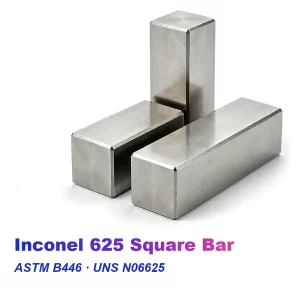
Request Availability →Square and rectangular sections forged for heavy die and hub work.
Request Availability →Custom Inconel 625 forged bar produced against your own specification and packing.
Request Availability →Heavy corrosion-exposed parts are where Inconel 625 forged bar earns its keep. Meanwhile, the marine and chemical trades order this bar wherever a large part must survive aggressive media.
Discuss Your Application →Blanks machined from Inconel 625 forged bar for corrosion-duty flanges.
Rings rolled onward from forged bar for seal and support duty.
Bodies machined from this forged bar for acid and chloride service valves.
Hubs cut from forged bar for seawater and slurry pumps.
Spacers machined from forged bar for hot gas path assemblies.
Heavy fittings, meanwhile, machined from this forged bar for process headers.
Hubs and adapters machined from Inconel 625 forged bar for subsea trees.
Supports cut from forged bar for corrosive-duty exchangers.
Detailed technical information including chemical composition, mechanical properties, standards and available dimensions.
Chromium, molybdenum and niobium carry the corrosion and strength work in this forged bar, with nickel balancing the austenitic matrix. Carbon stays at 0.10% maximum for weldability.
The full composition table on the Inconel 625 material page lists every element against its ASTM B446 limit.
The bar rows reproduce the ASTM B446 minimums for UNS N06625 forged bar by grade and section size. Every value below is a minimum unless the row states a range.
| Product Form | Condition | Tensile Strength, min. | Yield Strength (0.2%), min. | Elongation, min. |
|---|---|---|---|---|
| Forged bar up to 101.6 mm (4 in.) dia. | ASTM B446 Grade 1, annealed | >=827 MPa (120 ksi) | >=414 MPa (60 ksi) | 30% |
| Forged bar over 101.6 to 254 mm dia. | ASTM B446 Grade 1, annealed | >=758 MPa (110 ksi) | >=345 MPa (50 ksi) | 25% |
| Forged bar, all sizes | ASTM B446 Grade 2, solution annealed | >=690 MPa (100 ksi) | >=276 MPa (40 ksi) | 30% |
Grade 1 favours strength-led duty, while Grade 2 favours creep-led service above about 650 °C. Therefore, the ordered grade sets the acceptance level for forged bar on the certificate.
Design work leans on the published figures for this grade, and density sits at 8.44 g/cm³. Moreover, the solid-solution structure of forged bar stays non-magnetic across the working range.
The physical properties table on the Inconel 625 material page carries the remaining values, including the melting range and the elastic modulus.
Forged bar leaves the line in the annealed condition, because the anneal follows the forging passes. The two grades differ in the furnace route behind them.
| Condition | Treatment Behind the Forged Bar |
|---|---|
| Grade 1 | Annealed at 871 °C (1600 °F) minimum for strength-led duty |
| Grade 2 | Solution annealed at 1093 °C (2000 °F) minimum for creep-led service |
Consequently, no aging step follows, and the forged structure never degrades the corrosion performance of forged bar.
ASTM B446 governs the bar specification, B564 covers the forging route for blanks, and AMS 5666 answers aerospace orders. The three designations below settle most enquiries.
| Standard | Product or Application |
|---|---|
| ASTM B446 / ASME SB446 | Nickel alloy bar and rod, Grades 1 and 2 |
| ASTM B564 / AMS 5666 | Forging route for blanks; aerospace bar route |
| UNS N06625 - W.Nr. 2.4856 - NiCr22Mo9Nb | Material designations |
The full standards list on the Inconel 625 material page adds the DIN and ISO bar standards and the NACE sour-service citation.
Because forged bar follows the forging plan rather than one catalogue rule, state the diameter, condition and test locations on the enquiry.
| Product Form | Typical Supply Range |
|---|---|
| As-forged bar | 100–300 mm diameter, larger on request |
| Peeled forged bar | 100–300 mm diameter with a machined skin |
| Forged blocks | Square sections to 400 mm across flats |
Cut lengths of this forged bar run from 300 mm up to 6 m as standard, and disc blanks are cut to your drawing.
| Surface Condition | Typical Use |
|---|---|
| As-forged | Forging skin kept for rough machining of this forged bar. |
| Peeled | Machined skin for shops that want clean stock first. |
| Rough machined | Turned surface sized for final machining allowances. |
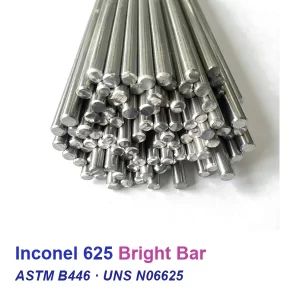
Any neighbouring section ships from the same heat, including square bar, special profile bar and centreless ground rod.
Get detailed information including specifications, standards, dimensions and material properties.
Six steps carry a forged bar enquiry from the first message to the delivered lot. Therefore, state the forged bar section and test plan first, and the grade follows from them.
Give the service temperature, the medium and the part that the forged bar will become.
Tell us the forged bar diameter or block size and the test locations the job expects.
Our offer then lists the forged bar price per kilogram, the lead time and the certificate set.
Grade, section, route and test plan enter the order acknowledgement.
The forged bar passes the forging plan and the release testing.
At last, our desk tracks the shipment and hands over the document pack ahead of the bar.
Our production and inspection processes are certified to international standards, and every delivery ships with EN 10204 3.1 mill test certificates.
Quality Management System
Pressure Equipment Directive
Material Standards Compliance
Mill Test Certificates
ASTM B446 governs the bar forms of UNS N06625 in Grade 1 and Grade 2. In addition, ASTM B564 covers the forging route for flange and ring blanks, and AMS 5666 answers aerospace orders.
Forged bar runs from 100 to 300 mm diameter as standard, and larger sections are quoted against the press schedule for the order.
Forging breaks up the cast structure and reaches sections that rolling cannot. The worked grain also answers ultrasonic inspection more cleanly on large sections.
No. The ASTM B446 minimums still govern the bar acceptance, and the certificate reports the values from the delivered condition. The B564 route simply covers blank geometry where the order needs it.
No. The forged bar arrives annealed or solution annealed after the forging passes. You can machine it as delivered.
Yes. Peeled forged bar carries a machined skin from 100 to 300 mm diameter for shops that want clean stock first.
A single bar or disc covers most forged sections, so a short cut is enough for a trial.
We quote forged bar mainly on FOB terms, and EXW or CIF follow on request.
Stock sections ship in 7 to 15 days, and made-to-order forging runs about 25 days.
Yes. Every heat ships with an EN 10204 3.1 certificate, and we arrange 3.2 endorsement on request.
Send the forged bar section, the test plan and the grade. Our reply then carries the forged bar price, the lead time and the certificate set. Because the section decides the forging plan for this forged bar, name the test locations at enquiry as well.
One disc of Inconel 625 forged bar proves the structure before a plant-wide commitment.