01
Round Bar
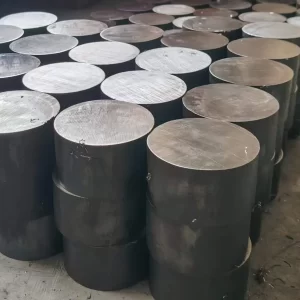
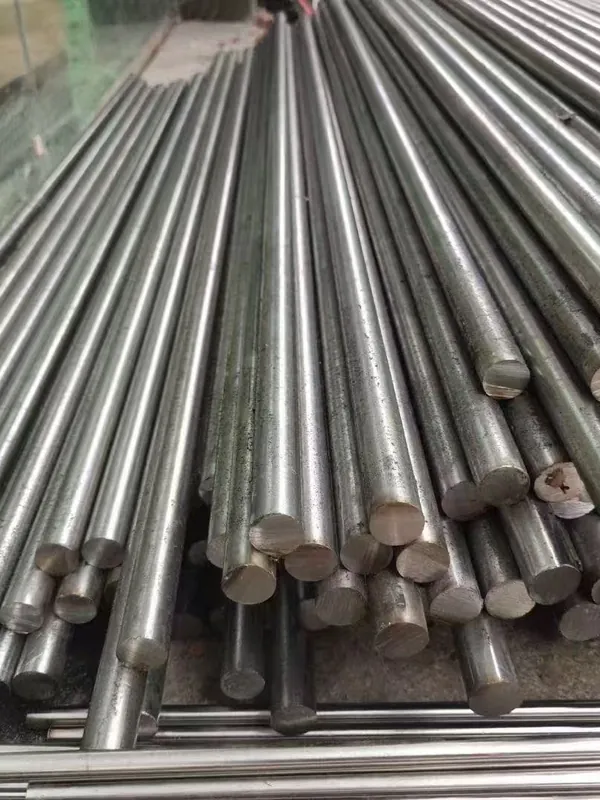
Hot-finished rounds from 6 to 300 mm serve shafts, rings, and machined housings.
Request Availability →Gamma-prime hardened nickel-chromium bar, rod, and spring wire in three heat-treatment routes for service to 704 °C.
Once the ordered cycle is fixed, the same bar delivers 965, 1103, or 1170 MPa minimum tensile.
Therefore, one order covers the bar for a bolt and the cold-drawn wire for the spring next to it.
Moreover, every lot ships with the solution treatment and aging record for its own heat.
Inconel X-750 bar and rod ships in one of three precipitation-hardened conditions. Type 2 takes solution treatment at 982 °C and a single age, which suits the highest strength demand. Type 1 adds a stabilising step for duty above 593 °C.
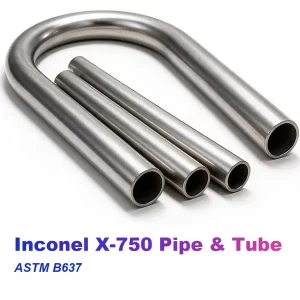
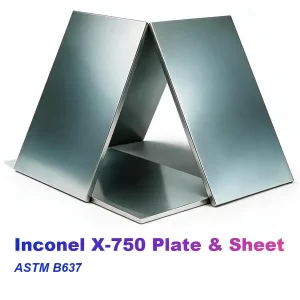
Bar and forgings follow ASTM B637, and the wire forms follow the AMS wire documents. Flat product and tubular product sit on the Inconel X-750 Plate and Sheet and Inconel X-750 Pipe and Tube pages. Meanwhile, the Inconel X-750 hub collects the data across every form.
However, the European designation NiCr15Fe7TiAl appears on many drawings, and it maps to this same grade.
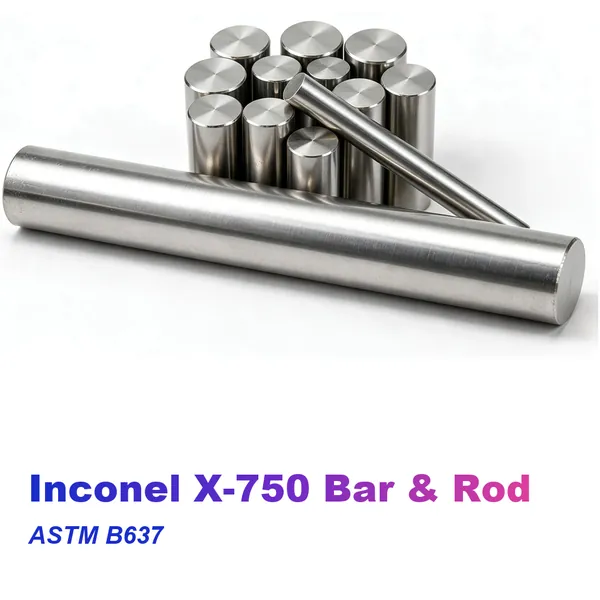
Inconel X-750 bar and rod carries the UNS N07750 grade, a precipitation-hardening nickel-chromium-iron alloy strengthened by gamma prime. Titanium at 2.25 to 2.75% and aluminium at 0.40 to 1.00% form the precipitate, and niobium at 0.70 to 1.20% slows its coarsening at temperature. Three heat-treatment routes take the same bar to 965 MPa, 1103 MPa, or 1170 MPa minimum tensile, and cold-drawn wire covers the spring tempers beside them. Southerly Alloy supplies and exports UNS N07750 bar and wire to ASTM B637, AMS 5667, and AMS 5698.
Type 2, Type 3, and Type 1 deliver 1170, 1103, and 965 MPa minimum tensile in that order.
Specifically, the stabilised Type 1 route holds 262 MPa at 649 °C for a hundred hours.
Therefore, one order can carry bar for a fastener and cold-drawn wire for the spring beside it.
Moreover, titanium and aluminium carry the strengthening, so the mill certificate lists no molybdenum.
The hardened matrix machines with carbide tooling and light feeds rather than heavy cuts.
Also, drawing lifts tensile past the aged floor, and no further aging step applies afterward.
Each lot travels with the furnace record for its solution treatment and for its age.
In fact, the AMS bar documents cap their own scope at 254 mm, and heavier sections move to the forged route.
Match the cycle to the duty before anything else. Where the bolt sees 600 °C for years, the stabilised route protects creep life. Where the part runs cooler, the single-age route buys more strength for the same money.
Grade, section, and cycle go on the purchase order, because the same bar reaches three strength levels.
Consequently, No. 1 temper and spring temper carry different aging cycles and different temperature windows.
In addition, sections beyond the bar range move to the forged route under the same standard.
Each certificate records the solution treatment and the age actually applied to the heat.
One melt feeds every bar section, and the ordered cycle then sets the final properties. Because titanium and aluminium oxidise easily, melting control matters as much as the furnace schedule.
Weighed nickel, chromium, iron, titanium, and aluminium enter the melt under a signed charge sheet.
Vacuum induction melting holds titanium and aluminium inside a narrow window on every heat.
Consumable electrode or vacuum arc remelting follows, and the route is recorded on the certificate.
Forging and rolling reduce the ingot to the ordered section, with finishing passes above the recrystallisation temperature.
The bar holds at 982 °C, 1093 °C, or 1149 °C, as the ordered Type requires.
Consequently, the Type 1 route adds a hold near 843 °C before the age begins.
The charge ages near 704 °C, and the chart records the time at temperature for every lot.
Finally, the bar is straightened, cut, and released against the ordered mechanical requirements.
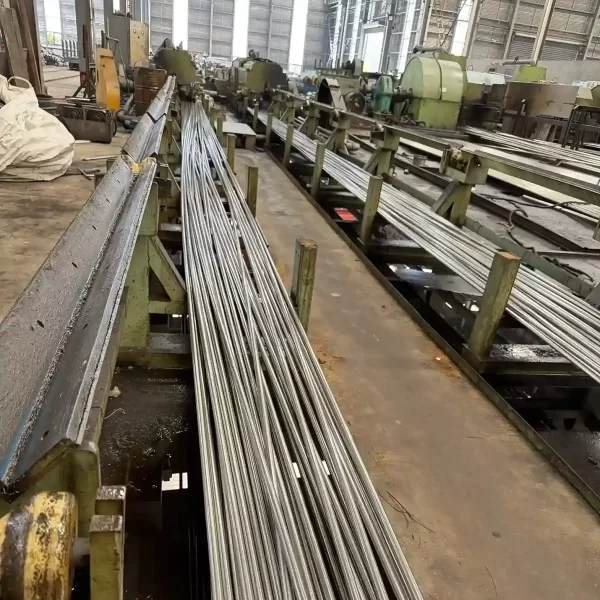
Our manufacturing facility provides reliable production capacity for seamless pipes, tubes, fittings, plates and bars with strict quality management systems.
Melting, forging, heat treatment, and finishing sit inside one boundary.
Saws, lathes, draw benches, and grinders cover the stocked sections.
Custom heats and stocked sections share one campaign calendar.
A metallurgist reviews every high-temperature enquiry before the offer leaves.
Chemistry and heat treatment decide these properties together, so the laboratory checks both. Therefore, the certificate reports the cycle that produced the mechanical values.
The laboratory reads titanium, aluminium, and niobium, then records each figure against the ASTM table.
Specifically, tensile and yield values come from the aged bar rather than from solution-treated stock.
Where the order asks for it, a hardness traverse covers the full bar diameter.
Consequently, every certificate carries the solution and aging record for the same heat.
Nine supply routes cover what a machine shop and a spring maker ask for. Moreover, every route names its governing document on the offer.
Hot-finished rounds from 6 to 300 mm serve shafts, rings, and machined housings.
Request Availability →Drawn stock in coil or straight lengths suits fasteners and small turned parts.
Request Availability →The drawn surface holds diameter through continuous machining.
Request Availability →Drawing lifts tensile past the aged floor where the drawing calls for it.
Request Availability →Hexagon stock feeds nuts, bolts, and valve bodies.
Request Availability →Square stock suits frame members and welded brackets.
Request Availability →Rectangular stock forms the base for fixtures and support plates.
Request Availability →Open-die forging covers rings and heavy sections above the bar range.
Request Availability →Cold-drawn wire in No. 1 and spring tempers serves coil and disc springs.
Request Availability →Turbine hardware and high-temperature springs are where this grade has served longest. Meanwhile, the fastener trade relies on it wherever preload must survive thermal cycling.
Discuss Your Application →Blades and wheels that hold shape under sustained heat.
Studs and nuts that keep preload through thermal cycling.
Springs that must hold load at 500 °C and above.
Thrust chamber parts exposed to hot gas.
Hold-down and spacer springs inside the vessel.
Seamless rolled rings for engine casings.
Jigs and baskets that survive repeated furnace cycles.
Bolting for duty well below −100 °C.
Detailed technical information including chemical composition, mechanical properties, standards and available dimensions.
The limits below come from ASTM B637, which shares one composition table with the AMS documents for UNS N07750. Titanium and aluminium set the gamma prime volume, and niobium slows its coarsening in service. Iron balances the matrix, and the nickel plus cobalt floor keeps the alloy austenitic. The mill certificate governs final acceptance.
| Element | Content |
|---|---|
| Nickel plus Cobalt (Ni + Co) | 70.00% min. |
| Chromium (Cr) | 14.00–17.00% |
| Iron (Fe) | 5.00–9.00% |
| Titanium (Ti) | 2.25–2.75% |
| Aluminum (Al) | 0.40–1.00% |
| Niobium + Tantalum (Nb + Ta) | 0.70–1.20% |
| Manganese (Mn) | 1.00% max. |
| Silicon (Si) | 0.50% max. |
| Copper (Cu) | 0.50% max. |
| Cobalt (Co) | 1.00% max. |
| Carbon (C) | 0.08% max. |
| Tantalum (Ta) | 0.05% max. |
| Sulfur (S) | 0.010% max. |
The three bar rows reproduce ASTM B637 Table 3, and the wire rows come from the AMS spring wire documents. Section size matters for Type 2, because heavy bar relaxes to a lower elongation floor. Every value below is a minimum unless the row states a range.
| Product Form | Condition | Tensile Strength, min. | Yield Strength (0.2%), min. | Elongation, min. | Hardness |
|---|---|---|---|---|---|
| Bar and rod, ASTM B637 Type 2 | Solution treated at 982 °C, aged | ≥170 ksi (1170 MPa) | ≥115 ksi (790 MPa) | 18% | 302–363 HB |
| Bar and rod, ASTM B637 Type 3 | Solution treated at 1093 °C, aged | ≥160 ksi (1103 MPa) | ≥100 ksi (689 MPa) | 20% | 267–363 HB |
| Bar and rod, ASTM B637 Type 1 | Solution treated at 1149 °C, stabilised, aged | ≥140 ksi (965 MPa) | ≥90 ksi (620 MPa) | 8% | 262 HB min. |
| No. 1 temper wire, AMS 5698 | Cold drawn, aged at 732 °C for 16 h | 165–220 ksi (1138–1517 MPa) | — | — | — |
| Spring temper wire, AMS 5699 | Cold drawn, aged at 649 °C for 4 h | 180–250 ksi (1241–1793 MPa) | — | — | — |
| Spring temper wire, long cycle | Solution treated, stabilised, aged | 145–190 ksi (1000–1310 MPa) | — | — | — |
Type 2 holds over sections up to 63.5 mm, and heavier bar relaxes to 15% elongation and 15% reduction of area. Type 1 trades tensile strength for creep life above 593 °C, which explains its lower elongation floor. Wire diameters up to 0.64 mm follow their own tensile bands in the AMS documents. Hardness ranges are informative only.
The figures below come from the published data for the grade and serve design work rather than acceptance testing. Moreover, the magnetic behaviour changes with heat treatment, so the Curie temperature depends on the cycle applied.
| Property | Value |
|---|---|
| Density | Approx. 8.28 g/cm³ |
| Melting range | Approx. 1393–1427 °C |
| Curie temperature, hot rolled | Approx. −143 °C |
| Curie temperature, fully heat treated | Approx. −125 °C |
| Modulus of elasticity at 20 °C | Approx. 214 GPa |
| Modulus of rigidity at 20 °C | Approx. 76 GPa |
| Poisson's ratio | 0.29 |
| Thermal conductivity at 20 °C | Approx. 12.0 W/m·K |
| Specific heat at 20 °C | Approx. 431 J/kg·K |
| Electrical resistivity at 20 °C | Approx. 1.22 µΩ·m |
| Thermal expansion, 20–100 °C | Approx. 12.6 µm/m·K |
| Strengthening route | Precipitation hardening only |
One ASTM document covers the bar and the forged section, and the AMS numbers split by melting route and by solution treatment. The wire tempers sit in their own pair of documents. The designations below serve cross-reference only.
| Standard | Product or Application |
|---|---|
| ASTM B637 / ASME SB637 | Bars, forgings, and forging stock for moderate or high temperature service |
| AMS 5667 | Bars, forgings, and rings, equalized and precipitation hardenable |
| AMS 5668 / AMS 5670 / AMS 5671 / AMS 5747 | Bars, forgings, and rings by melting route and solution treatment |
| AMS 5669 | Alloy bars, consumable electrode or vacuum induction melted |
| AMS 5698 | Wire, No. 1 temper, precipitation hardenable |
| AMS 5699 | Wire, spring temper, precipitation hardenable |
| NACE MR0175 / ISO 15156-3 | Sour service qualification where the order requires it |
| BS HR 505 / GE B14H41 | British and gas turbine designations |
| UNS N07750 · W.Nr. 2.4669 · NiCr15Fe7TiAl | Material designations |
| GB/T 14992 GH4145 · JIS NCF 750 | Chinese and Japanese designations |
| ASTM B168 / ASTM B163 | These documents do not cover UNS N07750 |
Pyromet X750, Nickelvac X750, Nicrofer 7016 TiNb, and Inconel are trademarks of their respective owners. We quote those names for reference only, and our deliveries follow the ASTM and AMS documents listed above.
The standard text from ASTM International settles any acceptance question.
Because ASTM B637 prints its own scope, the ranges below follow that text rather than one house rule. For that reason, state the form and the ordered size on the enquiry.
| Product Form | Typical Supply Range |
|---|---|
| Round bar | 6–300 mm diameter to ASTM B637 |
| Hex and square bar | 8–80 mm across flats |
| Flat bar | 3–150 mm thick, up to 300 mm wide |
| Cold-drawn bar | 6–100 mm diameter, closer tolerance by agreement |
| Centerless-ground bar | Tight diameter and straightness for shafting |
| No. 1 temper wire | 0.5–12 mm diameter in coils to AMS 5698 |
| Spring temper wire | 0.5–8 mm diameter in coils to AMS 5699 |
| Forged bar and ring | Sections above the agreed bar range to ASTM B637 |
Cut lengths run from 1 m up to 6 m as standard, and the AMS bar documents cap their scope at 254 mm. Therefore, heavier sections ship as forged product against the same standard.
Finish follows the operation that comes next rather than a catalogue default. In short, we agree the surface with your order.
| Surface Condition | Typical Use |
|---|---|
| Solution treated and pickled | Standard delivery for high-temperature service |
| Hot-worked | As-rolled or as-forged surface for parts that will be machined |
| Cold drawn | Close diameter control with a brighter surface |
| Peeled | Uniform diameter with a machined skin for further turning |
| Centerless ground | Tight diameter and straightness for shafting |
| Polished | Reduced roughness for product-contact and visible parts |
| Bright annealed | Scale-free surface for instrument and clean circuits |
Get detailed information including specifications, standards, dimensions and material properties.
Eight steps carry a bar enquiry from the first message to the delivered lot. Therefore, state the duty before anything else, and the cycle follows from it.
Give the service temperature, the load, and the medium the part will meet.
Tell us whether the order is bar, rod, forged section, or wire.
We agree Type 1, Type 2, or Type 3 against that duty.
The quotation states the price per kilogram, the lead time, and the certificate set.
Grade, section, cycle, and inspection level enter the order acknowledgement.
The melt shop weighs the charge and takes the heat through melting and remelting.
The bar passes the ordered solution treatment, the age, and release testing.
Finally, the desk tracks the shipment and forwards the documents ahead of arrival.
Feedback from buyers and engineers who source nickel alloy materials from Southerly Alloy.
“The rings held their dimensions through the aging cycle, and the second lot matched the first.”
“One supplier covered the bar and the spring wire, which removed a second order from the schedule.”
“The furnace chart travelled with the heat, so our customer's audit closed without a follow-up.”
Our production and inspection processes are certified to international standards, and every delivery ships with EN 10204 3.1 mill test certificates.
Quality Management System
Pressure Equipment Directive
Material Standards Compliance
Mill Test Certificates
ASTM B637 governs bar, forgings, and forging stock. The AMS 5667 group covers the same forms by melting route and solution treatment.
Type 2 is the usual choice where the bolt runs below about 593 °C, because it carries the highest tensile floor at 1170 MPa.
It adds a stabilising hold near 843 °C after the solution treatment. That protects creep life above 593 °C, at the cost of tensile strength and elongation.
No. 1 temper ages at 732 °C for sixteen hours and suits service to 538 °C. Spring temper ages at 649 °C for four hours and reaches higher strength for service to 371 °C.
Yes. The AMS bar documents cover solution-treated and equalized conditions for buyers who machine first and age afterwards.
Round bar runs from 6 to 300 mm diameter, hex and square stock covers 8 to 80 mm across flats, and heavier sections ship as forged product.
One bar covers most stock sizes, and a short cut is enough for a trial.
We quote mainly on FOB terms, and EXW or CIF follow on request.
Stock sections ship in 7-15 days, and made-to-order material runs about 25 days.
Yes. Every heat ships with an EN 10204 3.1 certificate, and we arrange 3.2 endorsement on request.
Send the section, the ordered length, and the service temperature. The quotation carries the price, the lead time, and the certificate set. Because the cycle decides which acceptance level applies, name the Type or the AMS number you need.
A single bar proves the grade before a plant-wide commitment.