01
Seamless Tube
Cold drawn and aged to AMS 5582, from 3.18 mm outside diameter upward.
Request Availability →Seamless gamma-prime tubing to AMS 5582 and AMS 5583, aged to 1069 or 1172 MPa for high-temperature fluid lines.
The AMS tubing documents cover seamless product, so the page states that boundary rather than blurring it.
Therefore, the standard route ages to 1069 MPa and the vacuum melted route reaches 1172 MPa.
Moreover, each lot ships with the solution treatment and the 704 °C age on its furnace chart.
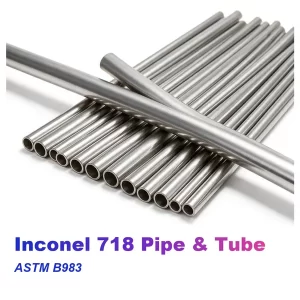
Inconel X-750 pipe and tube reaches the customer as seamless product in the solution-treated condition. Aging at 704 °C then lifts the tensile floor to 1069 MPa, and the vacuum melted route reaches 1172 MPa. Welded tube falls outside both documents.
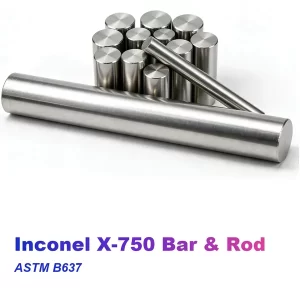
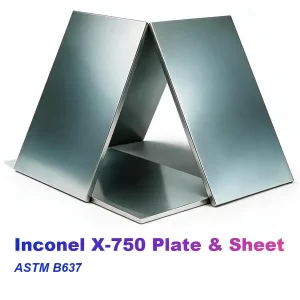
Tubular product serves the fluid lines that a spring or a bolt cannot reach. The flat and bar routes sit on the Inconel X-750 Plate and Sheet and Inconel X-750 Bar and Rod pages. Meanwhile, the Inconel X-750 hub gathers the figures for all three routes.
However, drawings often call ASTM B163 for high-temperature tubing, and that document does not list UNS N07750 at all.
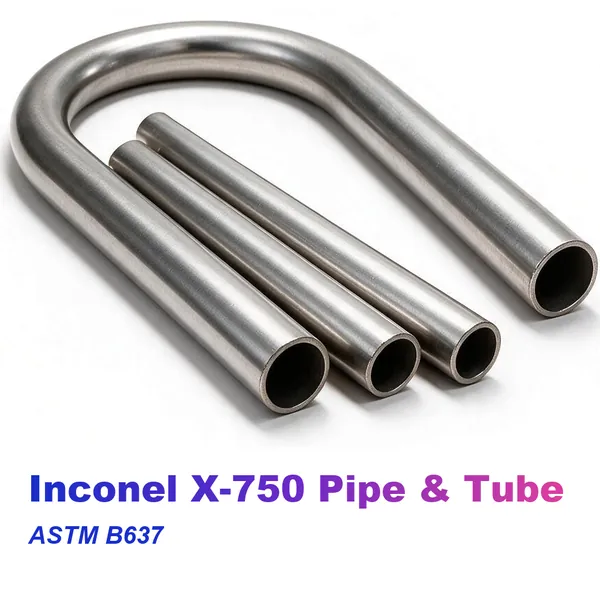
Inconel X-750 pipe and tube carries the UNS N07750 grade, a precipitation-hardening nickel-chromium-iron alloy strengthened by gamma prime. The AMS tubing documents cover seamless product only, from 3.18 mm outside diameter and 0.38 mm wall upward. Aging at 704 °C lifts tensile to 1069 MPa, and the vacuum melted route reaches 1172 MPa, which suits fuel lines, instrument runs, and nuclear assemblies. Southerly Alloy supplies and exports UNS N07750 seamless tube to AMS 5582 and AMS 5583.
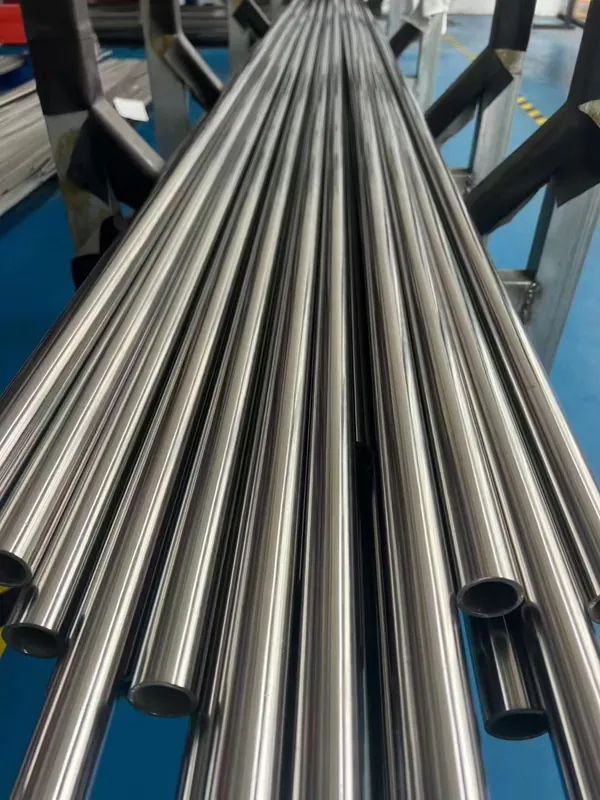
The standard document sizes from 3.18 mm outside diameter and 0.38 mm wall upward.
Therefore, vacuum melted stock reaches 1172 MPa minimum tensile after the age.
Specifically, the tubing documents require 310 MPa for twenty-three hours at that temperature.
The delivered condition caps tensile at 965 MPa, which keeps the tube formable before the age.
Moreover, the tubing documents make both checks mandatory rather than optional.
The AMS tubing documents reach seamless product only, so a welded line needs a different acceptance route.
Each lot travels with the furnace record for its solution treatment and its age.
In fact, 3.18 mm outside diameter is the smallest size the standard recognises.
Start with the wall and the pressure together. Where a fuel line or an instrument run must stay leak-tight at 600 °C, seamless tubing carries the duty. Where the line runs cool, a solid-solution alloy costs less.
Every length ships without a longitudinal weld, which removes one leak path from the design.
Consequently, the vacuum melted route serves buyers who must hold gas content down.
In addition, the tube bends in the solution-treated condition and hardens in the final furnace cycle.
Ultrasonic and eddy current checks travel with the lot rather than sitting in the optional column.
Seamless tube follows one route, and the ordered melting practice decides which document governs the lot. Because the aging cycle sets the final strength, the furnace chart carries real weight here.
A weighed billet from an approved heat becomes the starting stock for the tube.
The billet is pierced, then extruded or rolled toward the ordered outside diameter.
Successive drawing passes bring the tube to final size and tighten the wall tolerance.
We clean each length so that no residue carries into the solution treatment.
The charge holds at 982 °C or above, then cools in air.
Consequently, the tube ages near 704 °C for twenty hours to reach the ordered strength level.
Lengths are straightened, squared, and cut to the ordered figure.
Finally, ultrasonic and eddy current checks run before the lot is released.
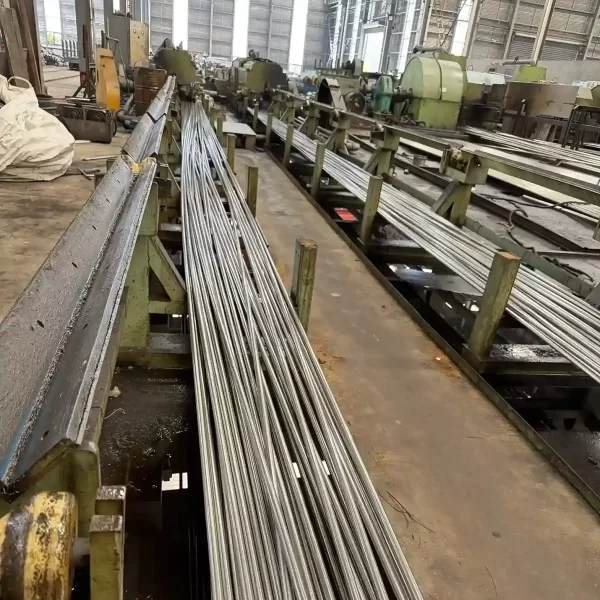
Our manufacturing facility provides reliable production capacity for seamless pipes, tubes, fittings, plates and bars with strict quality management systems.
Piercing, drawing, heat treatment, and testing share one boundary.
Piercing presses, draw benches, and straighteners span the seamless sizes.
Seamless and cold-drawn product run on one campaign calendar.
A metallurgist reviews every high-temperature line enquiry before the offer.
The tubing documents make testing part of the specification, so the laboratory and the NDT bench both sign the lot off. Therefore, the certificate reports the cycle and the test results together.
Titanium, aluminium, and niobium values come off the spectrometer and into the heat record.
Tensile results come from the aged tube rather than from the starting billet.
A wall-thickness scan covers the full length where the order calls for it.
Consequently, surface defects and dimensions are checked before the lot clears.
Five tubular routes cover what a high-temperature line asks for. In addition, every route names its acceptance document on the offer.
Cold drawn and aged to AMS 5582, from 3.18 mm outside diameter upward.
Request Availability →Remelted stock aged to AMS 5583 for the higher tensile floor.
Request Availability →Coil lengths for instrument runs and small manifolds.
Request Availability →Bent lengths cut to the bundle or coil drawing.
Request Availability →Heavier wall stock for lines under pressure-code jurisdiction.
Request Availability →High-temperature fluid lines are where this grade has served longest. Meanwhile, the nuclear trade relies on it for instrument runs and small manifolds.
Discuss Your Application →Lines that carry fuel close to the combustor.
Tubing exposed to engine bay heat.
Small bore runs inside the reactor building.
Tubes in high-temperature transfer duty.
Protective tubes for temperature sensors.
Lines that meet hot gas on the outside.
High-pressure runs in engine test stands.
Tubing inside heat treatment furnaces.
Detailed technical information including chemical composition, mechanical properties, standards and available dimensions.
The limits below come from ASTM B637, which shares one composition table with the AMS documents for UNS N07750. Titanium and aluminium set the gamma prime volume, and niobium slows its coarsening in service. Iron balances the matrix, and the nickel plus cobalt floor keeps the alloy austenitic. The mill certificate governs final acceptance.
| Element | Content |
|---|---|
| Nickel plus Cobalt (Ni + Co) | 70.00% min. |
| Chromium (Cr) | 14.00–17.00% |
| Iron (Fe) | 5.00–9.00% |
| Titanium (Ti) | 2.25–2.75% |
| Aluminum (Al) | 0.40–1.00% |
| Niobium + Tantalum (Nb + Ta) | 0.70–1.20% |
| Manganese (Mn) | 1.00% max. |
| Silicon (Si) | 0.50% max. |
| Copper (Cu) | 0.50% max. |
| Cobalt (Co) | 1.00% max. |
| Carbon (C) | 0.08% max. |
| Tantalum (Ta) | 0.05% max. |
| Sulfur (S) | 0.010% max. |
The tubing documents print two states, because the delivered tube is soft and the aged tube is strong. Both rows appear below, and the vacuum melted document adds its own floor. Every value is a minimum unless the row states a limit.
| Product Form | Condition | Tensile Strength, min. | Yield Strength (0.2%), min. | Elongation, min. | Hardness |
|---|---|---|---|---|---|
| Seamless tube, AMS 5582 | Solution treated, as delivered | ≤140 ksi (965 MPa) | ≤80 ksi (552 MPa) | 30% | — |
| Seamless tube, AMS 5582 | Aged at 704 °C for 20 h | ≥155 ksi (1069 MPa) | ≥100 ksi (689 MPa) | 15% | — |
| Seamless tube, AMS 5583 | Vacuum melted, solution treated, aged | ≥170 ksi (1172 MPa) | — | — | — |
The aging cycle in AMS 5582 holds at 704 °C for twenty hours, and the solution treatment runs at 982 °C or above with an air cool. Stress rupture runs at 310 MPa and 732 °C for twenty-three hours. Elongation is measured on a strip specimen at 15%, while a full-tube specimen reaches 20%.
The figures below come from the published data for the grade and serve design work rather than acceptance testing. Moreover, the magnetic behaviour changes with heat treatment, so the Curie temperature depends on the cycle applied.
| Property | Value |
|---|---|
| Density | Approx. 8.28 g/cm³ |
| Melting range | Approx. 1393–1427 °C |
| Curie temperature, hot rolled | Approx. −143 °C |
| Curie temperature, fully heat treated | Approx. −125 °C |
| Modulus of elasticity at 20 °C | Approx. 214 GPa |
| Modulus of rigidity at 20 °C | Approx. 76 GPa |
| Poisson's ratio | 0.29 |
| Thermal conductivity at 20 °C | Approx. 12.0 W/m·K |
| Specific heat at 20 °C | Approx. 431 J/kg·K |
| Electrical resistivity at 20 °C | Approx. 1.22 µΩ·m |
| Thermal expansion, 20–100 °C | Approx. 12.6 µm/m·K |
| Strengthening route | Precipitation hardening only |
Two AMS documents cover tubular product, and both reach seamless product only. The general requirements documents below sit behind them, and the inspection methods come from the ASTM standards named. The designations serve cross-reference only.
| Standard | Product or Application |
|---|---|
| AMS 5582 | Seamless tubing, solution heat treated, precipitation hardenable to 1069 MPa |
| AMS 5583 | Seamless tubing, vacuum melted, precipitation hardenable to 1172 MPa |
| ASTM B829 / ASTM B751 | General requirements for seamless tube and for welded tube |
| AMS 2634 | Ultrasonic inspection of thin materials |
| ASTM E426 | Eddy current examination of seamless tubing |
| ASTM E112 | Average grain size determination |
| NACE MR0175 / ISO 15156-3 | Sour service qualification where the order requires it |
| UNS N07750 · W.Nr. 2.4669 · NiCr15Fe7TiAl | Material designations |
| GB/T 14992 GH4145 · JIS NCF 750 | Chinese and Japanese designations |
| ASTM B163 | This document does not list UNS N07750 in its scope |
Pyromet X750, Nickelvac X750, Nicrofer 7016 TiNb, and Inconel are trademarks of their respective owners. We quote those names for reference only, and our deliveries follow the ASTM and AMS documents listed above.
The standard text from ASTM International settles any acceptance question.
Because AMS 5582 prints its own floor, the ranges below start where that document starts. For that reason, state the outside diameter and the wall on the enquiry.
| Product Form | Outside Diameter | Wall Thickness |
|---|---|---|
| Seamless tube, AMS 5582 | 3.18–219 mm | 0.38–12 mm |
| Seamless tube, AMS 5583 | Vacuum melted stock, sized to the order | Quoted per order |
| Coiled tube | 3.18–25 mm | 0.38–3 mm |
| U-bend tube | Bent to the bundle drawing | As drawn |
Wall thickness starts at 0.38 mm, because both tubing documents set that as their floor. Therefore, anything thinner needs a different route and should be raised on the enquiry.
Finish follows the operation that comes next rather than a catalogue default. In short, we agree the surface with your order.
| Surface Condition | Typical Use |
|---|---|
| Solution treated and pickled | Standard delivery for high-temperature service |
| Bright annealed | Scale-free bore for instrument and clean circuits |
| Polished bore | Reduced roughness for product-contact lines |
| Ground outside diameter | Tight tolerance for tube-to-tubesheet joints |
| U-bent and stress relieved | Bundle form ready for assembly |
Get detailed information including specifications, standards, dimensions and material properties.
Eight steps carry a tube enquiry from the first message to the delivered bundle. Therefore, give the outside diameter and the wall first, and the rest follows.
State the fluid, the working temperature, and the pressure class.
Tell us whether the line needs standard or vacuum melted stock.
Put the outside diameter, the wall, and the length in one table.
We agree ultrasonic, eddy current, and dimensional checks against the documents.
The quotation sets out the price per metre, the lead time, and the certificate set.
Grade, size, test level, and delivery terms enter the order acknowledgement.
The mill takes the lot through drawing, solution treatment, aging, and release testing.
Finally, the desk tracks the consignment and mails the papers before it lands.
Feedback from buyers and engineers who source nickel alloy materials from Southerly Alloy.
“The instrument runs held their wall thickness through repeated thermal cycling on the stand.”
“The aging chart arrived with the bundle, and our customer's review needed no further questions.”
“Vacuum melted tube met the gas content limit on the first heat, so the schedule held.”
Our production and inspection processes are certified to international standards, and every delivery ships with EN 10204 3.1 mill test certificates.
Quality Management System
Pressure Equipment Directive
Material Standards Compliance
Mill Test Certificates
AMS 5582 covers standard seamless tubing and AMS 5583 covers the vacuum melted version. Neither document reaches welded product.
No. ASTM B163 lists a long set of nickel alloys, and UNS N07750 is not among them. Tubular acceptance therefore rests on the AMS documents.
Seamless tube starts at 3.18 mm outside diameter with a 0.38 mm wall, because AMS 5582 prints those figures as its floor.
The solution-treated condition caps tensile at 965 MPa, which leaves enough ductility for bending and coiling. The age follows forming.
Useful strength holds to roughly 704 °C, and the documents set a rupture requirement at 732 °C. Oxidation resistance extends further for intermittent duty.
No. The AMS tubing documents cover seamless product, and we quote tubular work against those documents. A welded line needs a different acceptance route.
One length covers most stock sizes, and a short cut is enough for a trial.
We quote mainly on FOB terms, and EXW or CIF follow on request.
Stock sizes ship in 7-15 days, and made-to-order tube runs about 25 days.
Yes. Every heat ships with an EN 10204 3.1 certificate, and we arrange 3.2 endorsement on request.
Give us the outside diameter, the wall, and the working temperature. The quotation sets out the price per metre, the lead time, and the certificate set. Because the aging cycle fixes the strength level, name the document you need on the order.
A short trial length costs very little, so one tube settles the question before a plant-wide release.