
01
Inconel 601 Round Bar
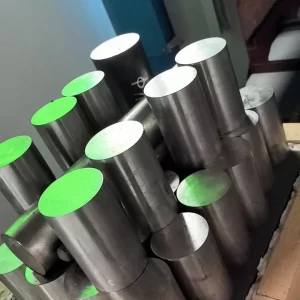
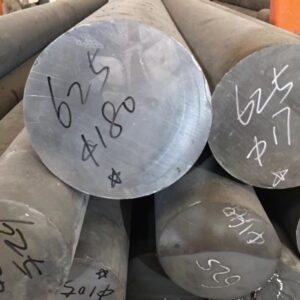
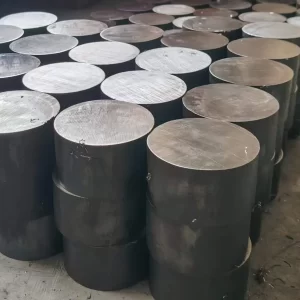
Solid sections from 6 to 500 mm for radiant tubes, muffles and furnace structures.
View Inconel 601 Round Bar →Nickel-chromium-aluminium bar and rod for furnace fixtures, radiant tubes and high-temperature process equipment.
First, we record your peak temperature and furnace atmosphere, so the annealing condition matches the duty.
Moreover, the EN 10204 3.1 certificate reports chromium and aluminium per heat, so oxidation performance gets checked rather than assumed.
In addition, AMS 5715 covers a defined range of forms and sizes, so we confirm your order falls within it before quoting to that standard.
Inconel 601 (UNS N06601, W.Nr. 2.4851) holds a protective oxide scale where ordinary heat-resistant steels flake away. The aluminium addition is what separates it from Alloy 600 in furnace atmospheres.
Southerly Alloy supplies round bar, rod and forged sections to ASTM B166 and ASME SB166 in annealed, hot-finished and cold-drawn conditions. Radiant tubes, carburizing baskets and burner hardware are the usual destinations for this bar. Therefore, we agree condition and cut length before production starts.

Inconel 601 is a nickel-chromium alloy with an aluminium addition that forms a tightly adherent oxide scale, giving far better high-temperature oxidation and carburization resistance than Alloy 600. Southerly Alloy supplies UNS N06601 bar and rod to ASTM B166 in annealed, hot-finished, and cold-drawn conditions, with cut lengths, surface finishes, and mill test documentation. Furnace builders, heat-treatment shops and petrochemical plants are typical buyers of this bar.

For example, the bar holds a tightly adherent oxide scale through continuous service in clean and mildly contaminated air.
Specifically, aluminium builds an Al₂O₃ layer under the chromia scale, slowing oxidation at peak temperature.
Moreover, the scale resists spalling through repeated heating and cooling, which extends fixture service life.
In addition, the bar holds up in carburizing and carbonitriding atmospheres where leaner nickel grades absorb carbon.
The bar also resists nitrogen pickup in nitriding furnaces that embrittle standard stainless fixture steel.
High chromium with aluminium handles oxidizing sulphur atmospheres at elevated temperatures.
Furthermore, useful short-time strength continues to roughly 1000 °C, above the austenitic stainless range.
Bar welds with matching filler metal and forms cleanly, so we can repair fixtures between campaigns.
Your Inconel 601 enquiry reaches the team that melts, anneals, and finishes nickel alloy bar on one site. We match the annealing condition to your furnace duty before cutting. One contact owns your order from quotation to shipment.
First, we review your furnace type, atmosphere, and cycle rate before proposing a grade and condition.
Moreover, we compile heat numbers, EN 10204 3.1 certificates and PMI records for each delivery.
In addition, a single fixture bar and a full container order travel the same qualified production route.
Therefore, quotations state condition, size, and documentation, rather than vague availability promises.
We melt Inconel 601 bar and rod from nickel, chromium and iron, holding aluminium inside the 1.0–1.7% window. Then we work, solution-anneal, and finish each heat to the ordered condition, recording results against the heat number.
First, we weigh nickel, chromium and iron to the UNS N06601 window, with aluminium added to target.
Next, we melt and refine the charge through AOD or VOD to control carbon, sulphur, and gas content.
Where cleanliness or uniformity demands it, ESR then refines the ingot and reduces segregation.
After that, we cast the refined metal into ingots under solidification controls that limit section segregation.
Then, we forge and roll ingots to bar section, breaking down the cast structure as size reduces.
Subsequently, we anneal bars between 1100 and 1200 °C and cool them rapidly to set the oxide-forming structure.
In addition, drawing, peeling or centreless grinding brings the bar to the final diameter, tolerance and surface.
Finally, we verify chemistry, mechanical properties, dimensions and surface against the purchase specification.
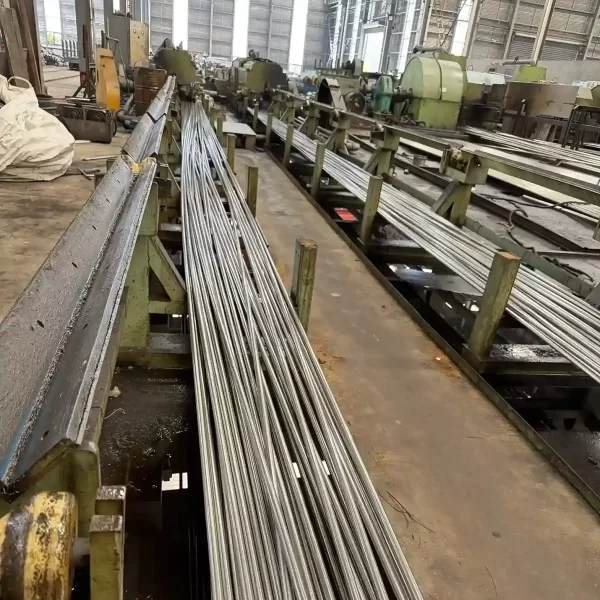
We produce Inconel 601 bar in stock and made-to-order diameters, agreeing condition, finish and cut length before production. The figures below cover the melting, annealing, and inspection capacity behind that commitment. Moreover, mixed-condition orders run as one campaign.
Specifically, melting, forging, annealing and inspection halls sit on one site.
Units cover hot working, solution annealing, and cold finishing.
Nickel alloy bar output across stock and made-to-order sizes.
Metallurgists match the annealing condition to your furnace duty.
We release Inconel 601 bar only after the heat demonstrates the ordered ASTM B166 requirements. We check composition by spectrometer, and we run tensile, hardness, and dimensional tests on the delivered condition. Moreover, records stay with the material for incoming checks.
We measure nickel, chromium and aluminium per heat and check them against the N06601 window.
Specifically, we measure diameter, straightness and cut length to the applicable B166 tolerance class.
In addition, tensile and hardness tests run on the ordered condition, with UT or PMI where specified.
Finally, EN 10204 3.1 documents tie every bar back to its heat number.
Round bar and rod carry most Alloy 601 enquiries, with hex, square, flat and forged sections covering fixture and machining work. Wire and welding products complete the range. Each form below is quoted separately, with its own condition and tolerance route.
Solid sections from 6 to 500 mm for radiant tubes, muffles and furnace structures.
View Inconel 601 Round Bar →Smaller diameters with controlled straightness for thermocouple sheaths and machined parts.
View Inconel 601 Round Rod →Hexagonal sections sized across flats for fasteners and multi-flat fixture parts.
View Inconel 601 Hex Bar →Square sections cut to your width and length for frames and supports.
View Inconel 601 Square Bar →Flat sections supplied to specified thickness and width for fabricated assemblies.
View Inconel 601 Flat Bar →Bright-drawn surface for automatic lathes and parts that stay visible.
View Inconel 601 Bright Bar →Closer diameter control with higher strength for precision components.
View Inconel 601 Cold-Drawn Bar →Ground diameter and straightness for spindles, pins and precision components.
View Inconel 601 Centreless-Ground Rod →Larger diameters and shaped sections with a controlled wrought structure.
View Inconel 601 Forged Bar →Fully threaded rod for high-temperature anchoring and bolting near furnace heat.
View Inconel 601 Threaded Rod →Wire from 0.2 to 12 mm in annealed and cold-drawn states for mesh, springs and formed parts.
View Inconel 601 Wire →ERNiCrFe-11 bare wire and ENiCrFe-11 electrodes matching the base metal at temperature.
View Inconel 601 Welding Wire →Buyers choose Alloy 601 bar where furnace atmospheres, not liquids, decide material life. Moreover, most of our 601 bar goes into thermal processing, petrochemical, and turbine hardware. Therefore, tell us your peak temperature and cycle rate at quotation.
Discuss Your Application →Heated tubes and covers that run hot in air and must not shed scale.
Fixtures that carry loads through carburizing and carbonitriding cycles.
Structural parts and sealed vessels held at temperature for long campaigns.
Sheaths that keep sensors readable in aggressive hot gas streams.
Components sitting directly in the flame path of industrial burners.
Heater internals, catalyst grids, and reformer hardware in a petrochemical plant.
Combustor and exhaust hardware exposed to hot oxidizing gas flow.
Grates, supports and fittings in waste incineration and ceramic kilns.
Detailed technical information including chemical composition, mechanical properties, standards and available dimensions.
The limits below follow ASTM B166 for UNS N06601 bar and rod, with iron as the balance of the melt. Aluminium is the addition that separates 601 from Alloy 600. The mill test certificate governs final acceptance.
| Element | Content |
|---|---|
| Nickel (Ni) | 58.0–63.0% |
| Chromium (Cr) | 21.0–25.0% |
| Aluminium (Al) | 1.0–1.7% |
| Iron (Fe) | Balance |
| Carbon (C) | 0.10% max. |
| Manganese (Mn) | 1.00% max. |
| Silicon (Si) | 0.50% max. |
| Copper (Cu) | 1.00% max. |
| Sulphur (S) | 0.015% max. |
Minimums are taken from ASTM B166 for UNS N06601 rod and bar and change with condition and section size. Annealed stock forms and machines easily; hot-finished stock suits parts that see no further softening. Confirm the ordered condition at quotation.
| Condition | Tensile Strength, min. | Yield Strength (0.2%), min. | Elongation, min. |
|---|---|---|---|
| Annealed (cold-worked or hot-worked) | ≥95 ksi (655 MPa) | ≥35 ksi (240 MPa) | 30% |
| Hot-finished, as-worked | ≥85 ksi (585 MPa) | ≥35 ksi (240 MPa) | 15% |
Some published datasheets quote 80 ksi (550 MPa) and 30 ksi (205 MPa) as the annealed minimum; the applicable ASTM B166 edition and the ordered condition decide final acceptance.
Typical room-temperature values below support design work rather than acceptance testing. Alloy 601 is non-magnetic at ambient temperature and stays so through its working range.
| Property | Value |
|---|---|
| Density | Approx. 8.11 g/cm³ |
| Melting range | Approx. 1360–1411 °C |
| Modulus of elasticity | Approx. 206 GPa |
| Thermal conductivity at 20 °C | Approx. 11.2 W/m·K |
| Specific heat at 20 °C | Approx. 450 J/kg·K |
| Electrical resistivity at 20 °C | Approx. 1.19 µΩ·m |
| Thermal expansion, 20–100 °C | Approx. 13.8 µm/m·K |
| Curie temperature | Below −196 °C |
| Magnetic behaviour | Non-magnetic at ambient temperature |
ASTM B166 governs bar and rod, with ASME SB166 used in pressure equipment. The designations below are cross-reference identifiers, not separate approvals. AMS 5715 covers a defined range of forms, so scope is confirmed before we apply it.
| Standard / Designation | Scope |
|---|---|
| ASTM B166 | Nickel-chromium-iron and related alloy rod, bar and wire |
| ASME SB166 | ASME edition for rod, bar and wire |
| SAE AMS 5715 | Nickel alloy 601 bars, forgings and rings |
| UNS N06601 | Material designation for Inconel 601 |
| W.Nr. 2.4851 / NiCr23Fe | European designation for Alloy 601 |
| JIS NCF 601 | Japanese designation |
| EN 10095 | Heat-resistant steels and nickel alloys |
| DIN 17742 / DIN 17752 | Wrought nickel alloys — chemistry and bar |
| ISO 9723 / ISO 9724 | Nickel and nickel alloy bar and rod |
| BS NA 49 | British nickel-chromium bar designation |
Ranges below reflect normally produced sections; exact availability depends on condition, finish, and quantity, confirmed at quotation. Tolerances follow ASTM B166 for the ordered condition. State diameter, section, length, and finish in the inquiry.
| Product Form | Typical Supply | Length |
|---|---|---|
| Round Bar | 6–500 mm dia. | Cut to length or random |
| Round Rod | 3–50 mm dia. | Cut to length |
| Bright Bar | 6–150 mm dia. | Cut to length or random |
| Square Bar | 10–150 mm | Cut to length or random |
| Hex Bar | 10–150 mm A/F | Cut to length or random |
| Flat Bar | 3–100 mm thick × 10–300 mm wide | Cut to length |
| Forged Bar | 100–500 mm dia. or forged section | Cut to length |
| Precision-Ground Rod | 3–100 mm dia., tight tolerance | Cut to length |
Diameters and lengths outside these ranges are reviewed against the production route before quotation.
Finish is chosen for the next step, whether machining allowance, welding or a scale-free furnace surface. Availability depends on diameter, condition, and order quantity. Each finish is agreed with the order, not assumed from stock.
| Surface Condition | Typical Use |
|---|---|
| Hot-worked (as-rolled or forged) | Parts that will be machined to size |
| Annealed and pickled | Scale-free surface for welding and furnace service |
| Solution annealed | Condition set for high-temperature duty and forming |
| Cold drawn | Close diameter control with a bright surface |
| Peeled | Uniform diameter with machined skin for further turning |
| Centreless ground | Tight diameter and straightness for spindles and pins |
| Polished | Reduced roughness for visible or product-contact parts |
| Rough turned | Controlled machining allowance on large or forged bar |
Get detailed information including specifications, standards, dimensions and material properties.
One coordinator keeps your Inconel 601 order moving from first message to shipment. First, oxidation life depends on the annealing condition, so we fix that route before cutting. Moreover, most quotations carry a confirmed lead time, and trial lengths help you qualify a size.
Give the grade, ASTM B166 condition, diameter, length, quantity, and duty temperature.
Then, tell us the peak temperature, furnace atmosphere, and cycle rate your part sees.
Price and lead time come from size, quantity, condition, and documents.
Next, we record grade, dimensions, inspection level, and delivery terms before cutting.
We work, solution-anneal, and test the heat to the specified condition.
Finally, certificates and export documents ship with the bar, and we confirm terms with you.
Our production and inspection processes are certified to international standards, and every delivery ships with EN 10204 3.1 mill test certificates.
Quality Management System
Pressure Equipment Directive
Material Standards Compliance
Mill Test Certificates
ASTM B166 / ASME SB166.
A single bar for most stocked diameters.
FOB for most orders; EXW, CFR, and CIF on request.
By weight, with the nickel and chromium share fixed at quotation.
Stock diameters ship in 7-15 days; made-to-order sizes take about 25 days.
Yes. 3.1 ships with every heat; 3.2 is booked on request.
Up to 1250 °C in clean air, depending on atmosphere, load and cycle rate.
Yes. The alumina sub-scale slows carbon pickup through carburizing and carbonitriding cycles.
Yes. Peeling, grinding and cutting cover sizes and lengths outside stock.
601 adds aluminium and more chromium for oxidation and carburization resistance; 600 suits chloride and caustic duty instead.
Send the grade, ASTM B166 condition, diameter, quantity and duty temperature to receive price, lead time and certificates in one reply. We fix the annealing route before production, so the bar you approve is the bar that arrives.
We stock Inconel 601 bar and rod in common diameters or produce it to your drawing, and we accept single-bar trials for many sizes.