
01
VIM Master Alloy Bar
Vacuum induction melted rounds from 30 to 200 mm for investment casting shops.
Request Availability →VIM-melted UNS N07713 remelt bar for foundries casting turbine blades, vanes, and turbocharger wheels.
Inconel 713C master alloy bar ships with oxygen and nitrogen values printed beside the heat chemistry.
Specifically, each heat lands inside the UNS N07713 window your casting specification expects.
Therefore, as-cast, peeled and ground rounds arrive cut to your charge-weight practice.
Inconel 713C master alloy bar is vacuum induction melted remelt stock for UNS N07713, the cast grade behind K418. Foundries remelt the bar and pour turbine blades, guide vanes, and turbocharger wheels. Moreover, the bar carries heat chemistry and gas data rather than wrought minimums.
| Quick Spec | Range |
|---|---|
| Material | Inconel 713C, UNS N07713, K418 |
| Melt route | Vacuum induction melting, remelt refinement on request |
| Diameter | 30–200 mm reference, other sizes to order |
| Condition | As-cast, peeled, or ground |
| Gas limits | O ≤ 15 ppm, N ≤ 10 ppm typical release limits |
| Certificate | EN 10204 3.1, 3.2 on request |
Meanwhile, the Inconel 713C material page carries the full composition window and the casting-side standards behind this master alloy bar.
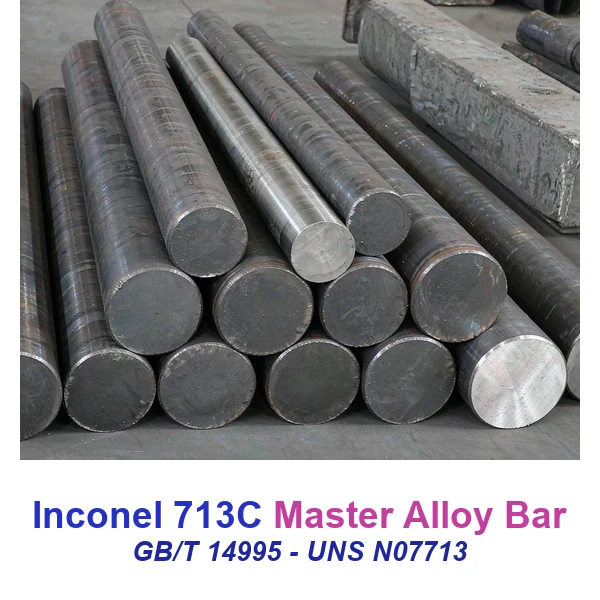
Inconel 713C master alloy bar is vacuum induction melted remelt stock for foundries that cast UNS N07713 in house. The bar arrives as-cast, peeled, or ground in diameters from 30 to 200 mm, with heat chemistry, oxygen and nitrogen values, and EN 10204 3.1 certificates on every lot. Southerly Alloy supplies K418 master alloy bar and ingot for turbine blades, guide vanes, and turbocharger wheels.
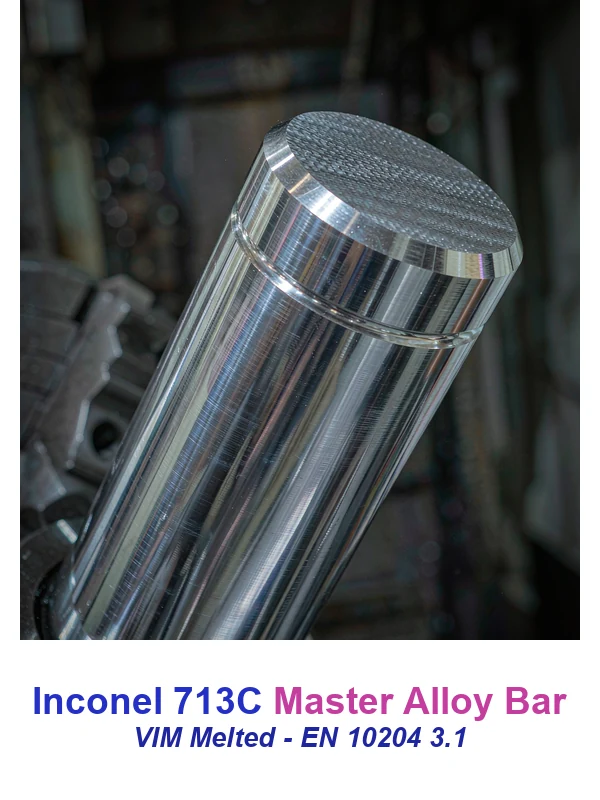
Vacuum induction melting holds oxygen near 15 ppm and nitrogen near 10 ppm before release.
Specifically, lab samples confirm the UNS N07713 range before the heat leaves the furnace.
As-cast, peeled, and ground rounds match different melt-charging and weighing practices.
Reference rounds run from 30 to 200 mm, and other diameters follow the order.
In addition, heat-number tags keep melt charging traceable at the crucible.
Oxygen and nitrogen results ride with chemistry on the EN 10204 3.1 document.
Moreover, bars arrive cut to your crucible size and charge-weight plan.
Indeed, GB/T 14995 and HB 5162 deliveries map cleanly onto the 713C casting route.
Ordering master alloy means fixing the element window, the gas limits and the bar format together, because the melt consumes all three. Southerly Alloy names them in the offer before the heat is scheduled.
We fix the element window and gas limits in writing before the furnace runs.
Every Inconel 713C master alloy bar lot ships with heat chemistry, gas values and traceability.
In addition, we advise peeled or ground surfaces against your weighing and charging practice.
Consequently, quotations follow weight and heat size, so campaign buyers see the melt economics clearly.
Every heat of this master alloy bar follows one vacuum route, and the release decision sits on chemistry and gas data. The sequence below shows what happens between charge and certificate.
Pure nickel, chromium, molybdenum, aluminum, titanium and niobium enter the furnace against the agreed window.
The VIM heat runs under vacuum, so oxygen, nitrogen and hydrogen stay near release limits.
Lab samples confirm the UNS N07713 range before the melt leaves the furnace.
Molten metal pours into round ingot molds sized to the ordered bar diameter.
Where the order calls for it, electroslag or vacuum arc remelting further cleans the electrode stock.
Bars stay as-cast or move to peeling and grinding for bright surfaces.
Finally, full chemistry, gas values and marking precede the EN 10204 3.1 certificate.
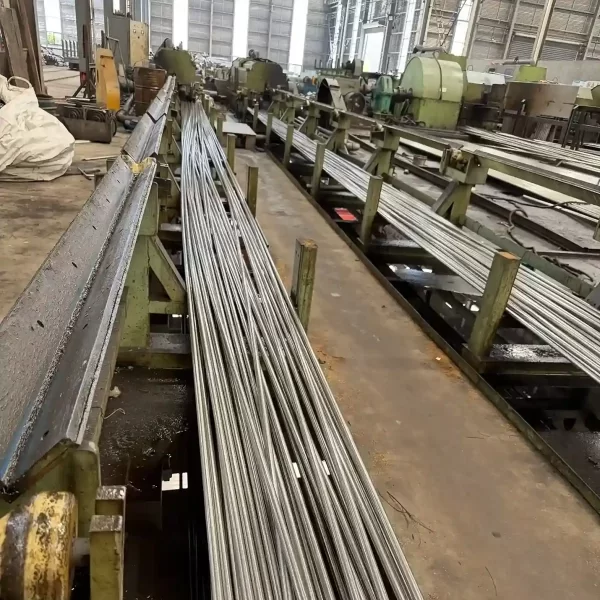
Southerly Alloy supplies Inconel 713C master alloy bar to foundry buyers across the reference diameter range. We confirm diameter, surface, gas limits and heat size before the melt is scheduled.
Vacuum melting, peeling and inspection sit inside one quality boundary.
Campaign heats for master alloy share the vacuum melting calendar.
A metallurgist reviews each 713C master alloy enquiry before the offer leaves.
Heat-tagged master alloy ships with complete export documentation.
Acceptance of master alloy rests on chemistry, gas content and cleanliness, and the lab evidence follows the bar. As a result, your melt plan starts from certified numbers.
The lab reads every element against the agreed UNS N07713 window before release.
Specifically, oxygen and nitrogen values are measured and printed on the certificate for this master alloy bar.
In addition, heat numbers stay on the bar surface and tags through packing.
Consequently, EN 10204 3.1 documents link every delivered length to its melting heat.
Form follows the melting practice of the foundry that will remelt this bar. Inconel 713C master alloy bar covers the setups we quote most.
Vacuum induction melted rounds from 30 to 200 mm for investment casting shops.
Request Availability →Specifically, machined bright surfaces suit foundries that weigh charges to tight melt budgets.
Request Availability →Furthermore, diameter-corrected rounds carry a controlled surface for automatic charging lines.
Request Availability →Meanwhile, short ingot formats suit smaller crucibles and pilot melts.
Request Availability →Custom Inconel 713C master alloy bar melted to your own element window and marking plan.
Request Availability →In practice, this master alloy bar serves buyers who cast the grade rather than machine it. Meanwhile, casting houses and turbine supply chains take most of the volume.
Discuss Your Application →Automotive and diesel foundries remelt Inconel 713C master alloy bar for turbine wheels at volume.
Investment casting shops pour rotor blades from certified 713C heats.
Nozzle and guide vane castings draw on the same gamma-prime strengthened stock.
Integral turbine rotors for aero and industrial duty cast from single heats.
Industrial gas turbine houses pour vanes and segments from VIM master alloy.
Diesel and gas engine valve makers remelt the grade for hot-seat parts.
Pilot melts qualify a new casting route on one certified heat.
Controlled revert programs blend with virgin master alloy to hold charge chemistry.
Detailed technical information including chemical composition, mechanical properties, standards and available dimensions.
The melt aims inside the UNS N07713 window shown on the full composition table on the Inconel 713C material page. Your order fixes the element ranges, and the certificate reports the heat of this master alloy bar against them. Trace elements follow the limits agreed at enquiry.
The bar itself carries no tensile acceptance, because remelting rather than machining consumes it. The row below describes typical as-cast castings poured from compliant heat, and casting acceptance follows the casting specification.
| Product Form | Condition | Tensile Strength | Yield Strength, 0.2% Offset | Elongation | Hardness |
|---|---|---|---|---|---|
| Investment castings from compliant heat | As-cast, typical | 900–1050 MPa (130–152 ksi) | 700–800 MPa (102–116 ksi) | 5–10% | 33–37 HRC |
Stress-rupture life, not room-temperature tensile, usually decides the casting. Therefore, agree rupture test conditions on the casting drawing rather than relying on the row above.
Density sits near 7.9 g/cm³, and the melting range of this master alloy bar spans roughly 1260 to 1340 °C. Moreover, the austenitic matrix stays non-magnetic through every melt state.
The physical properties table on the Inconel 713C material page carries the remaining reference values.
Most foundries remelt the bar as received, so heat treatment belongs to the casting route rather than the bar. Where a casting calls for the treated state, the cycle below applies to the casting.
| Step | Treatment Applied to Castings |
|---|---|
| Homogenize and solution | Near 1180 to 1220 °C, then air cooled |
| First age | Around 930 to 950 °C, then air cooled |
| Second age | Around 760 to 780 °C, then air cooled |
Castings cool in air rather than water, because thick 713C sections crack under a quench. As-cast delivery remains the standard state for this master alloy bar.
SAE AMS 5391 anchors the casting chemistry, and the Chinese master alloy standards govern ingot supply. The three designations below settle most enquiries.
| Standard | Product or Application |
|---|---|
| SAE AMS 5391 | UNS N07713 investment castings, the chemistry reference for the bar |
| GB/T 14995 / HB 5162 | K418 master alloy ingot supply conditions |
| UNS N07713 · W.Nr. 2.4671 · K418 | Material designations |
The full standards list on the Inconel 713C material page adds GB/T 14992 and GJB 5512.1 with the designation notes.
State the diameter, length, surface and single-piece weight at enquiry, because melt-charging practice decides the best bar format for this master alloy bar.
| Product Form | Typical Supply Range |
|---|---|
| Master alloy bar | Ø30–200 mm, cut lengths to order |
| Foundry ingot | Formats sized to crucible and charge weight |
| Marking | Heat number, alloy and diameter on bar and tag |
| Surface Condition | Typical Use |
|---|---|
| As-cast skin | Standard remelt surface with casting skin intact. |
| Peeled | Bright machined surface for clean charging and exact weighing. |
| Ground | Diameter-corrected rounds for automated charge lines. |
Get detailed information including specifications, standards, dimensions and material properties.
Six steps move a master alloy enquiry from first message to delivered heat. Therefore, state the casting route and the chemistry first, and the bar format follows from them.
Give the parts, the casting process and the melt practice this bar will feed.
Name the element window and the gas limits your casting specification needs.
Our offer then carries the price per kilogram, heat size, lead time and certificate set.
Diameter, surface, length and single-piece weight enter the order acknowledgement.
The heat runs, samples pass analysis and the bar is marked for release.
At last, our logistics desk chases the cargo and sends the certificate pack ahead of arrival.
Our production and inspection processes are certified to international standards, and every delivery ships with EN 10204 3.1 mill test certificates.
Quality Management System
Pressure Equipment Directive
Material Standards Compliance
Mill Test Certificates
A master alloy bar is certified remelt stock that foundries melt again and cast into parts. For this grade the bar carries the UNS N07713 chemistry together with gas and cleanliness data.
SAE AMS 5391 governs the casting chemistry the bar feeds, while GB/T 14995 and HB 5162 set the K418 ingot supply conditions.
The bar is remelted before it ever works, so acceptance rests on chemistry, gas values and cleanliness. Typical as-cast casting values appear in the table above.
Typical release limits are oxygen at 15 ppm or lower and nitrogen at 10 ppm or lower, and tighter values are negotiable.
Reference rounds of this master alloy bar run from 30 to 200 mm, cut to length, and other diameters follow the order.
As-cast skin suits weighed campaign charging, while peeled and ground surfaces suit exact melt budgets and automated lines.
A single bar covers a qualification melt, so one length is enough to start.
We price mainly on FOB terms, with EXW and CIF available against the destination.
Melt slots for this master alloy bar run about 25 days from order confirmation, and scheduled campaign slots follow the agreed plan.
Yes. An EN 10204 3.1 certificate with chemistry and gas values accompanies every heat, and 3.2 follows on request.
Send the casting route, the element window and the bar format you need. Our reply then carries the per-kilogram price, the heat size and the certificate set for this master alloy bar. One qualification heat proves the melt before a campaign commitment.