01
Monel K-500 Hot-Rolled Plate
Heavy gauge plate for linings, vessels, and structural panels.
Request Availability →Age-hardenable nickel-copper flat product for linings, pressure vessels, and non-magnetic structural panels.
The plate forms and welds in the soft condition, and the aging cycle then builds strength inside your own works.
Moreover, plate, sheet, and strip all draw on the same heat and the same certificate.
Because lined vessels punish a wavy plate, we fix flatness and edge condition at quotation.
Monel K-500 plate and sheet carries the UNS N05500 chemistry into flat-rolled product for linings and vessels. Because aluminium and titanium respond to aging, the plate gains strength after forming rather than during it. Fabricators therefore order the condition around their own shop sequence.
Dimensions and examination follow QQ-N-286 or DIN 17750, and ASTM B865 supplies the chemistry. Because B127 covers UNS N04400 alone, we name the governing documents in writing before booking. In addition, we agree flatness and edge condition at the same time.
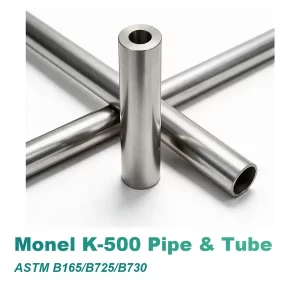
The Monel K-500 hub holds the full grade data, and Monel K-500 Pipe and Tube covers the tubular side of the same alloy.
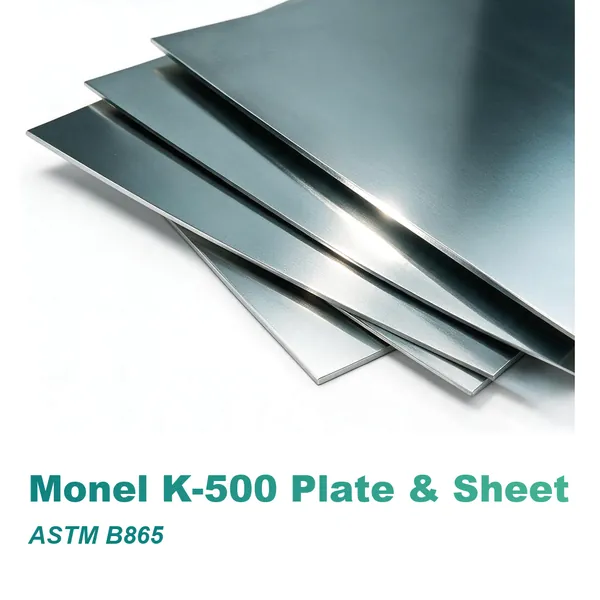
Monel K-500 plate and sheet brings age-hardened nickel-copper strength to linings, vessels, and non-magnetic panels. Southerly Alloy supplies hot-rolled plate, cold-rolled sheet, and strip against ASTM B865 chemistry and the aged acceptance values from the same document, in annealed or fully aged condition, with flatness control and EN 10204 3.1 records. Ballast tank linings, caustic storage, and deck panels are the usual destinations.
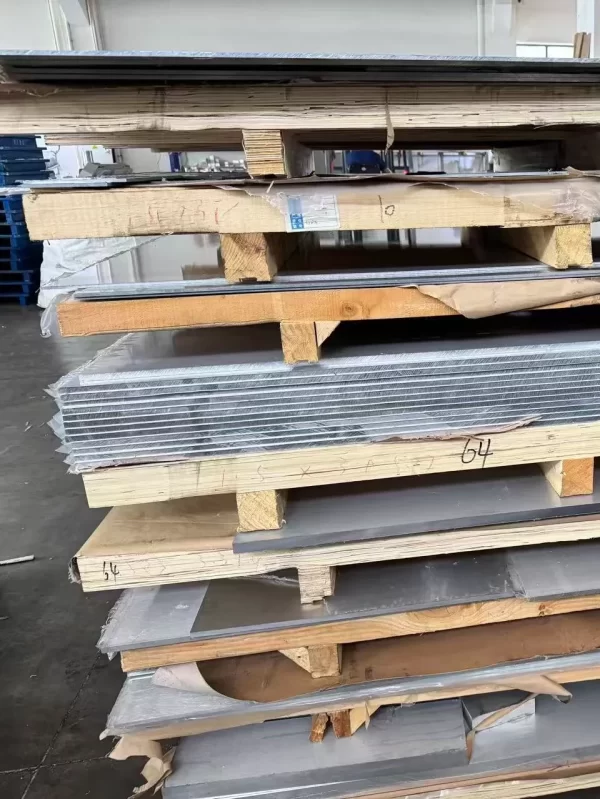
The plate bends and welds while soft, and aging then lifts yield to roughly three times the Monel 400 figure.
Thick plate, thin sheet, and coiled strip share a chemistry, so a fabricator buys one grade for a whole vessel.
Tank linings meet seawater, brine, and alkaline media without the pitting that carbon steel suffers.
Because permeability stays near unity, deck panels and instrument housings avoid magnetic interference.
Plate welds with ERNiCu-7 filler, and we review the joint strength before aging starts.
Leveling and stretcher passage bring a plate within the flatness the drawing names.
However, hydrofluoric, mercury-bearing, and sour duty needs review, since aged material cracks more readily than Monel 400 in some of them.
No ductile-to-brittle transition appears, so lined equipment keeps its toughness at cryogenic temperature.
A plate order succeeds or fails in the shop, not in the warehouse. Since the aging cycle often runs after fabrication, we settle the sequence before the steel is even rolled. Four points shape how we price and release this product.
We confirm whether aging happens before or after forming, and the certificate then matches that choice.
Then, we state the flatness and edge tolerance rather than leaving it to mill practice.
Where the drawing allows it, one plate replaces two welded sheets and removes a seam from the vessel.
Finally, EN 10204 3.1 certificates and ultrasonic records support the design review on coded vessels.
The route starts at the melt and ends at a leveled plate, and every step leaves a record for the heat. Because leveling sets flatness late in the sequence, it gets the same attention as rolling. Eight steps carry the plate from melt to dispatch.
We weigh cathode nickel and copper to the N05500 window, and aluminium plus titanium enter as master alloys.
An electric furnace melts the charge, and refining practice holds gas pickup and oxide inclusions down.
Casting practice then limits segregation, and the cropped slab travels to the hot mill.
The mill breaks the slab down and rolls it toward the ordered thickness.
Afterwards, cold reduction brings thin sheet and strip to gauge with a clean surface.
A rapid quench from about 980 °C keeps aluminium and titanium in solution ahead of aging.
Aged orders then hold near 595 °C for 8 to 16 hours before a slow furnace cool toward 480 °C.
Finally, leveling, shearing, and inspection close the route before the certificate prints.
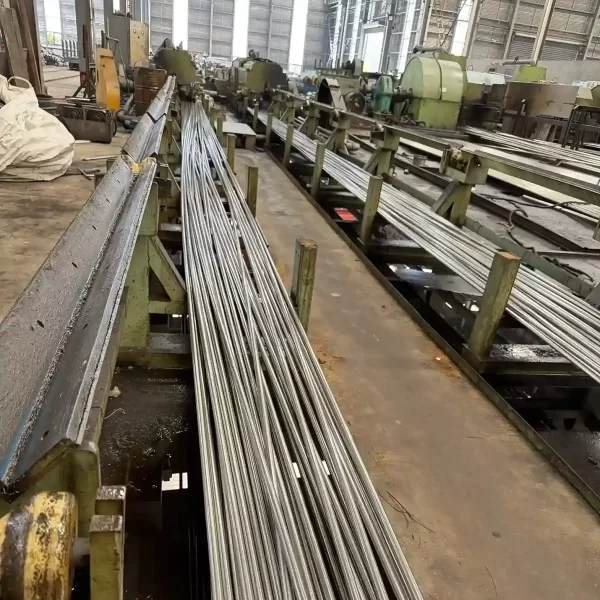
Stock sizes and custom plates both leave this plant, and we fix the aging plan before the slab is cast. Because flat work is judged on the finished surface, capacity and inspection sit side by side here. Mixed-condition runs travel as one campaign.
Melting, rolling, leveling, and inspection stand under one roof.
Hot mills, cold mills, levelers, and shears serve the flat-product line.
Nickel-copper and nickel alloy plate ships in stock and custom sizes.
Metallurgists match condition, flatness, and examination level to the drawing.
Annealed, aged, and cold-rolled stock each carry their own test plan.
We release no plate until the ordered requirements stand proven on its heat. Because a plate hides internal soundness, we examine it rather than trusting the surface alone.
The laboratory confirms the N05500 balance and prints aluminium and titanium before rolling starts.
Also, every plate is gauged across the width, and flatness is measured against the ordered tolerance.
Coupons from the same heat supply the tensile and hardness figures that appear on the certificate.
Furthermore, coded pressure work receives ultrasonic testing for internal soundness on request.
Plate, sheet, and strip all leave the plant, and the ordered gauge decides which mill does the work. Meanwhile, every form below carries its own dimensions and inspection record.
Heavy gauge plate for linings, vessels, and structural panels.
Request Availability →Thinner plate with a clean surface for fabricated assemblies.
Request Availability →General-purpose sheet for linings, trays, and ducting.
Request Availability →Narrow coiled strip for press work and continuous forming.
Request Availability →Coiled product for lines that stamp or roll form before aging.
Request Availability →Disc blanks cut for vessel heads and flanged components.
Request Availability →Cut blanks sized to your drawing for machining.
Request Availability →Tight-gauge strip for instrument and diaphragm work.
Request Availability →Vessel and tank work takes most of this product, and marine fabrication follows behind. In return, one grade covers the lining, the structural panel, and the instrument housing on the same site.
Discuss Your Application →Bonded and loose linings protect coded vessels in corrosive service.
Ship tanks meet seawater and brine without a coating system to maintain.
Alkaline media at moderate temperature meet a wall that resists attack.
Tube sheets drilled for K-500 tubes keep one chemistry through the bundle.
Survey and degaussing work uses panels that do not disturb a magnetic signature.
Brine heaters and evaporator shells use plate against hot, concentrated brine.
Digester internals resist corrosive cooking liquor at moderate temperature.
Bulkheads and brackets carry load in splash-zone conditions.
Detailed technical information including chemical composition, mechanical properties, standards and available dimensions.
ASTM B865 supplies the limits below for UNS N05500, and the same table applies to plate as to bar. Aluminium and titanium decide the aging response, so both appear on the certificate. Therefore the mill test certificate governs final acceptance.
| Element | Content |
|---|---|
| Nickel (Ni) plus Cobalt (Co) | 63.0% min. |
| Copper (Cu) | 27.0–33.0% |
| Aluminium (Al) | 2.30–3.15% |
| Titanium (Ti) | 0.35–0.85% |
| Iron (Fe) | 2.0% max. |
| Manganese (Mn) | 1.5% max. |
| Carbon (C) | 0.18% max. |
| Silicon (Si) | 0.50% max. |
| Sulfur (S) | 0.010% max. |
The aged conditions below carry the acceptance values that B865 publishes, and we apply them to flat product by agreement. Flat-rolled stock usually ships annealed or fully aged, and a 185 HB hardness ceiling covers the unaged state. Hence the ordered condition decides the test plan.
| Condition / Section | Tensile Strength, min. | Yield Strength (0.2%), min. | Elongation, min. |
|---|---|---|---|
| Hot-worked and age-hardened, all sizes | ≥140 ksi (965 MPa) | ≥100 ksi (690 MPa) | 20% |
| Annealed and age-hardened, sections to 25.4 mm (1 in.) | ≥130 ksi (895 MPa) | ≥90 ksi (620 MPa) | 20% |
| Annealed and age-hardened, sections over 25.4 mm (1 in.) | ≥130 ksi (895 MPa) | ≥85 ksi (585 MPa) | 20% |
Cold-reduced plate and sheet that will be aged after forming are quoted against the annealed rows, and we name the chosen row on the quotation.
Figures below are typical room-temperature values offered for design work rather than acceptance. Moreover, permeability stays low across the full width of a plate.
| Property | Value |
|---|---|
| Density | Approx. 8.44 g/cm³ |
| Melting range | Approx. 1315–1350 °C |
| Modulus of elasticity | Approx. 179 GPa |
| Thermal conductivity at 20 °C | Approx. 17.5 W/m·K |
| Specific heat at 20 °C | Approx. 419 J/kg·K |
| Electrical resistivity at 20 °C | Approx. 0.615 µΩ·m |
| Thermal expansion, 20–100 °C | Approx. 13.7 µm/m·K |
| Magnetic behaviour | Essentially non-magnetic at ambient temperature |
No ASTM flat-rolled specification names UNS N05500, and the table below therefore separates what each document governs. Consequently we confirm the reference list with you before we book the order.
| Standard / Designation | Scope |
|---|---|
| ASTM B865 | Source of the UNS N05500 chemistry and the aged acceptance values |
| AMS-QQ-N-286 | Federal specification covering K-500 plate, sheet, and strip |
| DIN 17750 | Nickel-copper flat-rolled product — plate, sheet, and strip |
| ISO 6208 | Nickel-copper plate, sheet, and strip |
| BS 3072 NA18 | British nickel-copper plate and sheet standard |
| DIN 17743 | Wrought nickel-copper alloys — chemical composition |
| UNS N05500 | Material designation for Monel K-500 |
| NACE MR0175 / ISO 15156-3 | Material guidance for H2S-bearing service |
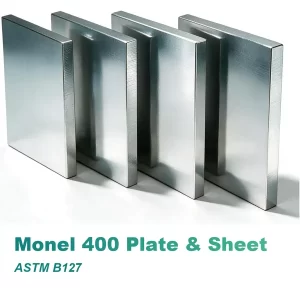
B127 appears on many supplier lists for this grade, although its scope covers UNS N04400 alone, so we do not quote against it.
Ranges below describe normally produced flat product, and exact availability follows thickness, width, and quantity. In addition, tolerances track the document named for the ordered form.
| Product Form | Typical Supply | Length |
|---|---|---|
| Hot-Rolled Plate | 4.76–100 mm thick, to 2000 mm wide | Up to 6000 mm |
| Cold-Rolled Plate | 2–5 mm thick, to 1500 mm wide | Up to 6000 mm |
| Sheet | 0.46–6.4 mm thick, to 1500 mm wide | Up to 6000 mm |
| Strip | 0.13–6.4 mm thick, to 600 mm wide | Coil or cut length |
| Circle and Ring | Cut to your outside and inside diameter | As ordered |
Sizes outside these ranges go through a route review, and we quote them once the drawing is clear.
Finish follows the next operation, whether the plate will be bonded, welded, or left visible. Additionally, the surface condition matters wherever a lining has to sit flat against a wall.
| Surface Condition | Typical Use |
|---|---|
| Hot-rolled and annealed | Scale-free plate ready for fabrication |
| Pickled | Clean surface for bonded linings |
| Cold-rolled | Smooth finish for visible and precision work |
| Annealed | Soft condition when aging follows forming |
| Age-hardened | Full-strength plate delivered ready to install |
| Descaled and leveled | Flat plate within the ordered tolerance |
| Ground | Uniform surface for inspection and coating |
| Bright annealed strip | Oxide-free strip for instrument and diaphragm work |
Get detailed information including specifications, standards, dimensions and material properties.
One coordinator keeps the order moving from enquiry to loading, and the aging sequence is agreed in writing first. Because flatness problems surface late in fabrication, that step matters more here than elsewhere.
Give grade, form, thickness, width, length, quantity, and delivery condition.
We confirm which standard governs chemistry, dimensions, and examination for your order.
One message carries the price, the lead time, and the documents behind them.
We log the aging sequence, flatness tolerance, and commercial terms before rolling starts.
The mill rolls to gauge, solution-anneals, and then ages the plate to the ordered condition.
Thickness, flatness, tensile, and hardness checks close the route on every plate.
Documents travel with the plates, and we settle delivery terms before dispatch.
Feedback from buyers and engineers who source nickel alloy materials from Southerly Alloy.
“Plate arrived soft, flat, and true to gauge, so we formed the shell, welded it, and aged the finished vessel without a rework pass.”
“The flatness tolerance came in writing before we placed the order, which saved an argument at goods-in.”
“Caustic tank linings cut and fitted cleanly, and the certificates satisfied our client's pressure-equipment review.”
Our production and inspection processes are certified to international standards, and every delivery ships with EN 10204 3.1 mill test certificates.
Quality Management System
Pressure Equipment Directive
Material Standards Compliance
Mill Test Certificates
ASTM B865 supplies the chemistry and the aged acceptance values, while QQ-N-286 or DIN 17750 covers dimensions and examination.
No. B127 is written for UNS N04400, so K-500 flat product is quoted against QQ-N-286 or DIN 17750 instead.
Plate starts at about 4.76 mm, sheet runs between 0.46 and 6.4 mm, and strip sits between 0.13 and 6.4 mm.
Yes. GTAW with ERNiCu-7 filler suits the alloy, and the joint stays softer than the parent plate because it cannot age harden.
Form and weld first, then age. Rough machining happens before the cycle too, since the section contracts slightly during aging.
Stock sizes start at one plate, and we scale from there for cut lengths or full bundles.
We quote FOB by default, and EXW or CIF terms are open on request.
Ready sizes ship in 7–15 days, and custom thickness or aged plate needs roughly 25 days.
Yes. Every heat ships with a 3.1 certificate, and we arrange third-party witness for 3.2 when the project asks.
Yes, up to 2000 mm wide depending on gauge, and one plate often removes a seam from the vessel.
Send the form, thickness, width, length, quantity, and delivery condition. One reply carries the price, the lead time, and the paperwork scope. We confirm the governing standard and the aging sequence before rolling, so the plate you approve is the plate that loads.
Both stock and custom gauges stay open for order, and a trial plate before volume keeps risk low.