01
Seamless Pipe and Tube
Cold-drawn or extruded to ASTM B622, with outside diameter up to 88.9 mm.
Request Availability →Seamless and welded tubular product for reducing-acid circuits, where oxidants and mid-temperature heat both end service life.
Seamless, welded, and exchanger tube each carry their own specification, so one enquiry covers the whole run.
Welded assemblies travel with the cooling record that keeps ductility in the joint.
Pickled, bright annealed, or polished bores are settled before the tube is drawn.
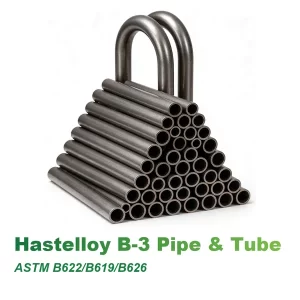
Hastelloy B-2 Pipe and Tube carries the UNS N10665 grade in seamless and welded forms. Hydrochloric and sulfuric acid leave the bore intact while the stream stays reducing. Because chromium stays near zero, an oxidant in the circuit ends service life fast.
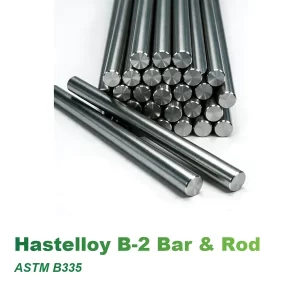
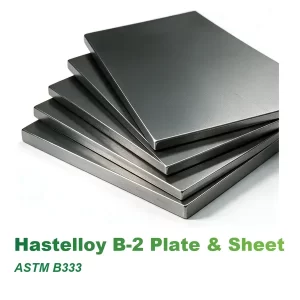
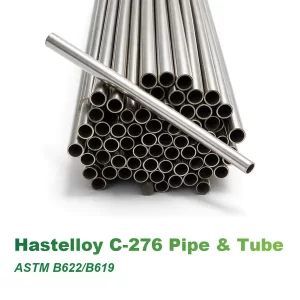
Tubular product from this grade reaches plants as seamless tube, welded pipe, and welded exchanger tube. The Hastelloy B-2 hub carries the alloy background, and the Hastelloy B-2 Bar and Rod and Hastelloy B-2 Plate and Sheet pages cover the other two routes.
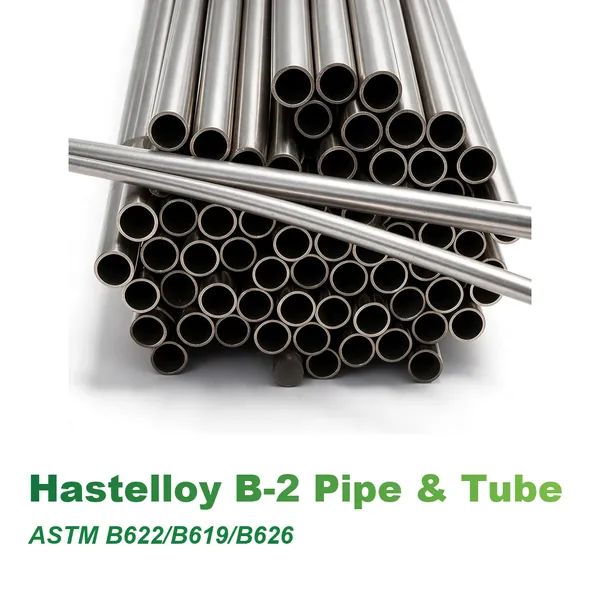
Hastelloy B-2 pipe and tube carries the UNS N10665 grade in seamless, welded, and exchanger-tube form. The nickel-molybdenum chemistry resists hydrochloric and sulfuric acid while the stream reduces, and it tolerates no oxidant at all. Ni4Mo orders between 540 and 815 °C, so welded joints need either a fast quench or a route that keeps heat out. Southerly Alloy works as a professional supplier and exporter of tubular product to ASTM B622, B619, and B626.
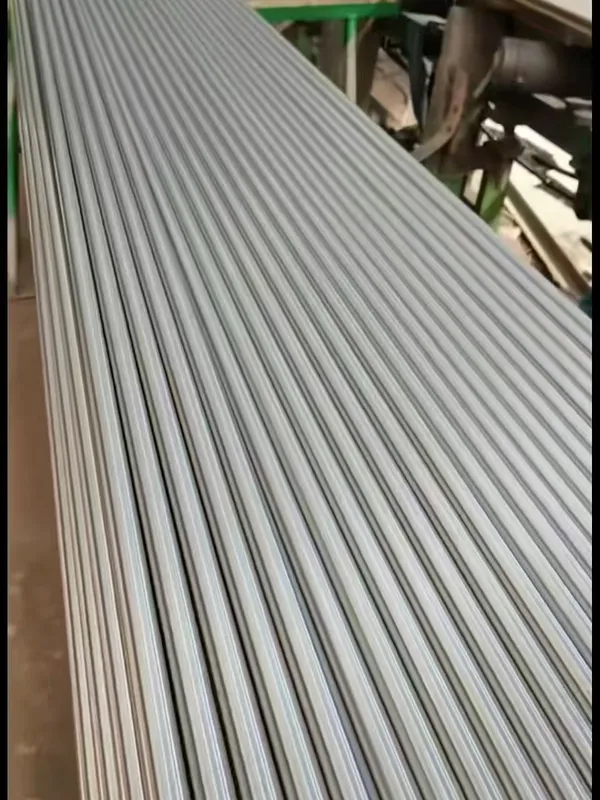
Moreover, concentration and temperature both stay inside the envelope while the stream reduces.
Consequently, non-oxidizing sulfuric, phosphoric, and organic acids remain inside the working envelope.
Nickel dominance keeps chloride-bearing media from cracking the tube wall.
Carbon at 0.02% or less limits weld-zone precipitation, so many joints need no further anneal.
Therefore, seamless tube stops at 88.9 mm outside diameter, which is the ceiling the standard sets.
Meanwhile, welded pipe covers Schedule 5S through 80S at 8 in nominal and larger.
In addition, welded exchanger tube runs from 3.2 to 88.9 mm outside diameter.
Ni4Mo ordering between 540 and 815 °C governs the heat treatment we schedule after welding.
Hastelloy B-2 pipe and tube orders hinge on two things. First, the standard the mill certifies against and the inspection level behind it. Then, the weld detail and the bore finish your drawing calls for.
Consequently, we check the ordered tube against B622, B619, or B626 before the quotation leaves.
EN 10204 3.1 certificates carry chemistry, tensile results, and the pressure-test record.
In addition, pickled, bright annealed, or polished bores follow the service you describe.
We cap the ends and crate the lengths, then quote FOB, CIF, or DAP against your port.
Tube making starts with a hollow that must stay free of the phases Ni4Mo forms at mid temperature. Consequently, the mill solution anneals and quenches every lot before the final pass.
We cut and inspect the billet before the piercing line takes it.
The press forms a hollow shell from the heated billet.
Pilger or plug mills reduce wall thickness toward the ordered gauge.
Drawing brings the tube to final diameter and wall over a mandrel.
The mill holds the tube near 1065 °C so precipitated phases dissolve again.
A water quench locks the single-phase structure in place before ordering begins.
Acid cleaning leaves a bore free of scale for acid-plant service.
Pressure testing, diameter checks, and wall measurement clear the lot.
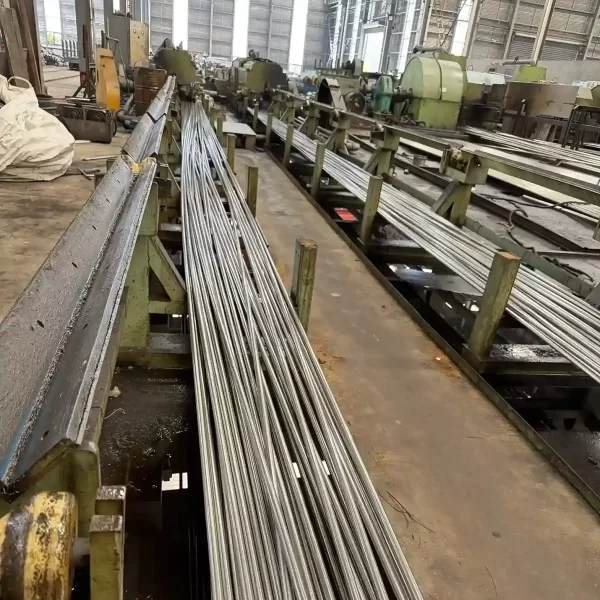
Tubular capacity sits on the same site as our bar and flat-product lines, so a mixed order ships together. Meanwhile, the quench line sets the pace on made-to-order campaigns.
Piercing, drawing, and quench lines share one site.
Hot rolling, cold drawing, and grinding equipment sit in this base.
Seamless and welded routes draw on the same melting campaign.
Welding procedure and heat-treatment questions reach a specialist.
Release evidence follows the product document on your order. Chemistry runs against the N10665 window, and pressure testing accompanies the tube where the standard calls for it.
We compare molybdenum, iron, and carbon readings with the ASTM limits.
Hydrostatic or eddy-current testing runs on the ordered condition.
The inspection bay measures wall thickness, outside diameter, and straightness.
Each report names the melt, so your QA team can trace one lot end to end.
Tubular product splits into three routes, and each one names its own specification. Consequently, the order should state the route alongside the size.
Cold-drawn or extruded to ASTM B622, with outside diameter up to 88.9 mm.
Request Availability →B619 pipe in Schedule 5S through 80S, at 8 in nominal and larger.
Request Availability →B626 exchanger tube from 3.2 to 88.9 mm outside diameter.
Request Availability →Bent bundles for exchangers, with bend radius agreed at quotation.
Request Availability →Tubular parts carry acid through a plant, so the medium and its temperature set the working life. Meanwhile, hydrochloric service dominates the order book.
Discuss Your Application →Lines and exchangers carrying HCl from dilute streams to boiling.
Tube bundles inside reducing sulfuric acid circuits.
Heating tubes in wet-process acid plants.
Reboiler and condenser tubing in reducing organic acid service.
Immersion heaters and circulation tubing in steel pickling.
Injection and sampling lines inside reducing-acid reactors.
Spray and drain lines for acidic flue-gas treatment.
Transfer tubing for acid-bearing solvent recovery service.
Detailed technical information including chemical composition, mechanical properties, standards and available dimensions.
Limits below come from the tubular documents, which carry the same composition table as the rod specification. Iron and chromium stay low because they drive Ni4Mo formation. The mill certificate governs final acceptance.
| Element | Content |
|---|---|
| Nickel (Ni) | Balance |
| Molybdenum (Mo) | 26.0–30.0% |
| Iron (Fe) | 2.0% max. |
| Chromium (Cr) | 1.0% max. |
| Cobalt (Co) | 1.00% max. |
| Manganese (Mn) | 1.0% max. |
| Carbon (C) | 0.02% max. |
| Silicon (Si) | 0.10% max. |
| Phosphorus (P) | 0.04% max. |
| Sulfur (S) | 0.03% max. |
The seamless document sets a lower yield floor than the rod specification does. Therefore, the table below reflects seamless tube, and welded product follows its own document.
| Product Form | Condition | Tensile Strength | Yield Strength, 0.2% Offset | Elongation |
|---|---|---|---|---|
| Seamless pipe and tube, ASTM B622 | Solution annealed and descaled | ≥110 ksi (760 MPa) | ≥45 ksi (310 MPa) | 40% |
B619 welded pipe and B626 welded tube set their own acceptance minima. Consequently, we quote those numbers from the edition named on your purchase order.
Typical room-temperature values below support design work rather than acceptance testing. In addition, the alloy stays non-magnetic in the annealed condition.
| Property | Value |
|---|---|
| Density | Approx. 9.22 g/cm³ |
| Melting range | Approx. 1330–1380 °C |
| Modulus of elasticity | Approx. 217 GPa |
| Thermal conductivity at 0 °C | Approx. 11.1 W/m·K |
| Thermal conductivity at 100 °C | Approx. 12.2 W/m·K |
| Electrical resistivity at 20 °C | Approx. 1.37 µΩ·m |
| Thermal expansion, 20–93 °C | Approx. 10.3 µm/m·K |
| Magnetic behaviour | Non-magnetic in the annealed condition |
ASTM B622 governs seamless pipe and tube, and its reach stops at 88.9 mm outside diameter. Specifically, welded product moves to B619 for pipe and B626 for exchanger tube. Meanwhile, the designations below identify the same melt.
| Standard | Product or Application |
|---|---|
| ASTM B622 / ASME SB622 | Seamless pipe and tube to 88.9 mm outside diameter |
| ASTM B619 / ASME SB619 | Welded pipe in Schedule 5S, 10S, 40S, and 80S and larger |
| ASTM B626 / ASME SB626 | Welded tube, 3.2–88.9 mm outside diameter |
| ASTM B829 | General requirements for seamless pipe and tube |
| ASTM B775 / B751 | General requirements for welded pipe and welded tube |
| ASTM B335 / ASME SB335 | Rod in the same grade |
| ASTM B333 / ASME SB333 | Plate, sheet, and strip in the same grade |
| ASTM B564 / ASME SB564 | Forgings |
| ASTM B366 / ASME SB366 | Factory-made wrought fittings |
| DIN 17751 | Seamless tube in wrought nickel alloys |
| ISO 6207 | Nickel alloy seamless tube |
| UNS N10665 | Unified Numbering System designation |
| W.Nr. 2.4617 / NiMo28 | European designation for Alloy B-2 |
| GB/T 15007 NS322 | Chinese designation |
| SAE AMS | No aerospace specification covers this grade |
The tubular documents come from ASTM International, and their text settles any acceptance question.
Ranges below follow the scope each document defines, so the seamless ceiling and the welded sizes differ. For that reason, name the route alongside the size on the enquiry.
| Product Form | Outside Diameter | Wall Thickness |
|---|---|---|
| Seamless pipe and tube, ASTM B622 | Up to 88.9 mm | 0.5–12.7 mm |
| Welded pipe, ASTM B619 | Schedule 5S through 80S, 8 in nominal and larger | Per schedule |
| Welded tube, ASTM B626 | 3.2–88.9 mm | 0.41–3.7 mm |
| U-bend tube | As drawn, bent to drawing | 0.7–6 mm |
A bore finish decides how easily the tube cleans and how long it lasts in acid service. In short, we agree it with the order rather than assume a default.
| Surface Condition | Typical Use |
|---|---|
| Solution annealed and pickled | Standard delivery for hydrochloric and sulfuric acid service |
| Bright annealed | Scale-free bore for instrument and clean circuits |
| Polished bore | Reduced roughness for product-contact lines |
| Mechanically descaled | Welded product cleaned without acid pickling |
Get detailed information including specifications, standards, dimensions and material properties.
One coordinator carries your B-2 tube order from enquiry to shipment. We settle the acid duty, the route, and the welding detail before drawing begins.
Give the acid, its concentration, the diameter, and the wall.
Confirm seamless, welded, or exchanger tube against the drawing.
Price, lead time, and the test set arrive in one reply.
Grade, size, inspection level, and delivery terms go on record before drawing.
We draw, anneal, quench, and pressure test the tube to the ordered condition.
Certificates and export papers travel with the tube under the agreed terms.
Finally, the shipping desk tracks the load and mails the document set before it lands.
Feedback from buyers and engineers who source nickel alloy materials from Southerly Alloy.
“The seamless tube for our acid cooler arrived with the pressure-test record attached, so our inspector cleared the bundle in one visit.”
“Welded B-2 pipe held its ductility after site fabrication, which our previous grade could not manage.”
“Pickled bores and capped ends meant the lengths went straight into the rack without rework.”
Our production and inspection processes are certified to international standards, and every delivery ships with EN 10204 3.1 mill test certificates.
Quality Management System
Pressure Equipment Directive
Material Standards Compliance
Mill Test Certificates
B622 for seamless product, B619 for welded pipe, and B626 for welded exchanger tube.
Up to 88.9 mm outside diameter, which is the ceiling ASTM B622 sets.
Yes, at every concentration up to boiling, provided no oxidant enters the circuit.
Not always. However, severe acid duty still calls for a solution anneal and a fast quench.
ERNiMo-7 wire to AWS A5.14 or ENiMo-7 electrodes to AWS A5.11.
One length covers most stocked sizes.
FOB is standard, and EXW or CIF quotes follow once you name the destination.
Mainly on weight, with the nickel and molybdenum share fixed at the order date.
Stocked sizes ship in 7-15 days. Meanwhile, made-to-order drawing runs about 25 days.
Yes. 3.1 certificates ship with every lot, and 3.2 third-party endorsement comes on request.
Send the acid, its concentration, the outside diameter, and the wall you need. Our engineers then reply with price, lead time, and the test set. We confirm the route and bore finish before drawing, so the lot you approve is the lot that ships.
Trial lengths are welcome, and a single piece of most stocked sizes proves the finish before a plant-wide order.