
01
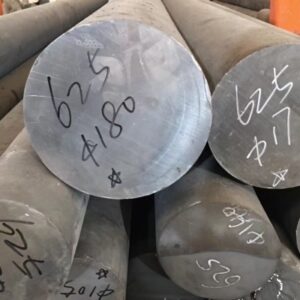
Hastelloy C-276 Rough-Turned Forged Bar
Turned heavy stock leaving a machining allowance on every diameter.
Request Availability →Hastelloy C-276 forged bar to ASTM B564 for wet chlorine valve bodies, hydrochloric reactor blocks and FGD hubs.
ASTM B574 reaches eleven grades, and every heat of this Hastelloy C-276 forged bar reads N10276.
Moreover, NACE MR0175 orders for this Hastelloy C-276 forged bar carry hardness data keyed to each heat.
Furthermore, the release papers record the 1120–1160 °C anneal actually used for this Hastelloy C-276 forged bar.
Hastelloy C-276 forged bar arrives in UNS N10276, the nickel-molybdenum-chromium-tungsten grade that resists wet chlorine, hydrochloric acid and mixed acid-chloride streams. Solutions of chlorine dioxide, hypochlorite and chloride-bearing flue gas also sit inside the envelope of this Hastelloy C-276 forged bar.
We supply Hastelloy C-276 forged bar to ASTM B574 and ASME SB574 in hot-worked, solution-annealed and cold-drawn conditions. Your order for this Hastelloy C-276 forged bar carries heat-number records, a solution-anneal record and EN 10204 3.1 paperwork for goods-in checks. Besides, we agree the solution-anneal record and the finish on the forged bar before we book a heat of UNS N10276.
Meanwhile, the chemistry and the sour-service data behind Hastelloy C-276 forged bar sit on our Hastelloy C-276 material page for cross-reference.
Applications for Hastelloy C-276 forged bar follow the bar and rod program, where sections, conditions and document sets are quoted together.
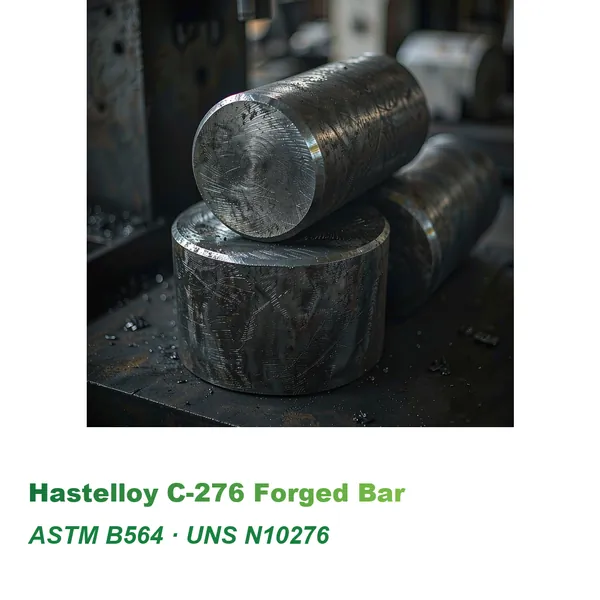
Hastelloy C-276 forged bar arrives in UNS N10276, the nickel-molybdenum-chromium-tungsten grade whose molybdenum and tungsten face reducing acids while chromium covers oxidising media. We provide ASTM B574 forged bar in forged, rough-turned and solution-annealed conditions for wet chlorine plants, hydrochloric acid service and flue-gas desulfurisation hardware. Every Hastelloy C-276 forged bar order carries heat-number traceability, EN 10204 3.1 mill test reports and full export documentation.
For example, molybdenum and tungsten in this Hastelloy C-276 forged bar hold up where moist chlorine destroys stainless steel.
Specifically, this Hastelloy C-276 forged bar serves hydrochloric acid across the full concentration range.
Moreover, one stream can carry oxidising and reducing species at once, and this Hastelloy C-276 forged bar meets both.
Besides, UNS N10276 sits inside NACE MR0175 / ISO 15156, so this Hastelloy C-276 forged bar enters H2S duty with a hardness record.
In addition, carbon at 0.010% max and silicon at 0.08% max leave no carbides in this Hastelloy C-276 forged bar to precipitate.
Therefore, molybdenum at 15.0–17.0% lifts the pitting and crevice resistance of this Hastelloy C-276 forged bar in chloride liquor.
Consequently, drawing raises the yield strength of this Hastelloy C-276 forged bar above the annealed floor where shafts need it.
Finally, this Hastelloy C-276 forged bar stays practically non-magnetic at ambient temperature for instrument work.
Heavy wet-chlorine valve bodies make the forging route the first question for Hastelloy C-276 forged bar. Therefore, we agree the reduction plan, the B564 route and the test position on this Hastelloy C-276 forged bar before pricing.
We record the medium, concentration and temperature your Hastelloy C-276 forged bar will meet before proposing a delivery condition.
Specifically, EN 10204 3.1 papers, heat numbers and hardness records follow each Hastelloy C-276 forged bar delivery.
In addition, this Hastelloy C-276 forged bar flows through one route whether you order one length or a container lot.
Quotations for this Hastelloy C-276 forged bar name the medium, section, finish and document set instead of leaving them open.
Bar production for Hastelloy C-276 forged bar runs from charge weighing to final packing. Our team logs each stage of this Hastelloy C-276 forged bar route against its heat number.
Charge weighing comes first, and this Hastelloy C-276 forged bar starts from electrolytic nickel, chromium, molybdenum and tungsten.
First, the charge for this Hastelloy C-276 forged bar melts and refines under AOD practice that holds carbon low.
Next, forging and rolling reduce the ingot to this Hastelloy C-276 forged bar section.
Then, we hold this Hastelloy C-276 forged bar between 1120 and 1160 °C and quench it in water.
After that, acid pickling leaves this Hastelloy C-276 forged bar scale-free for fabrication.
We then draw, turn or grind this Hastelloy C-276 forged bar to the ordered size and finish.
Subsequently, straightening brings this Hastelloy C-276 forged bar inside the ordered runout band.
Finally, chemistry, hardness and dimensional checks clear this Hastelloy C-276 forged bar for dispatch.
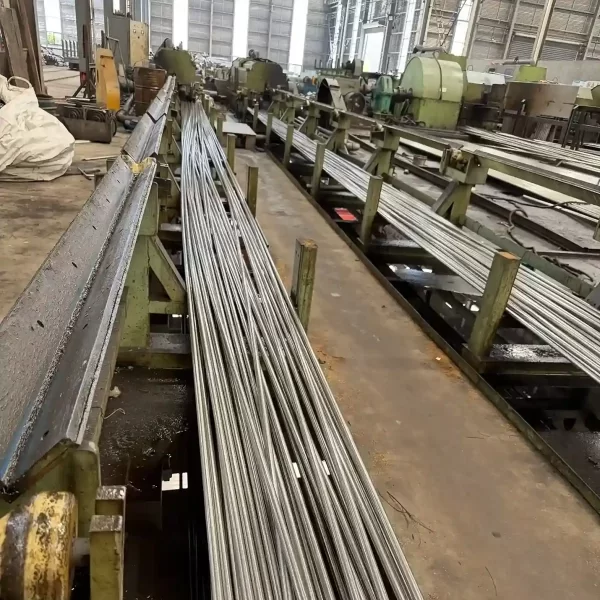
Stock lots and made-to-order lengths of Hastelloy C-276 forged bar leave on one schedule. Moreover, this Hastelloy C-276 forged bar sits inside our bar and rod program.
Melting, forging, annealing and pickling bays serve Hastelloy C-276 forged bar under one roof.
Units covering hot working, annealing, drawing and pickling for this Hastelloy C-276 forged bar.
Hastelloy C-276 forged bar output across stock and bespoke lots.
Metallurgists who set the anneal plan and hardness scope of this Hastelloy C-276 forged bar against your duty.
In addition, sealed export packing carries this Hastelloy C-276 forged bar worldwide.
No Hastelloy C-276 forged bar leaves the yard before its heat has cleared our ISO 9001 inspection route. In addition, we check this Hastelloy C-276 forged bar against the chemistry, hardness, dimensions and surface the order names.
We confirm the grade and heat number of this Hastelloy C-276 forged bar against your purchase order.
Specifically, sour-service lots of this Hastelloy C-276 forged bar go against the 35 HRC ceiling per NACE MR0175.
In addition, the diameter, length and runout of this Hastelloy C-276 forged bar go against the ordered tolerance class.
Every consignment of this Hastelloy C-276 forged bar ships with EN 10204 3.1 papers keyed to its heat.
Conditions and variants of Hastelloy C-276 forged bar cover different machining and service needs. In addition, the list below sets out the Hastelloy C-276 Forged Bar variants we quote most often.
Turned heavy stock leaving a machining allowance on every diameter.
Request Availability →Forged squares serving blocks and heavy posts.
Request Availability →Forged flats holding a wrought structure for heavy fabrications.
Request Availability →Blocks sawn from forged stock for further machining.
Request Availability →Stock sized for downstream forging and ring-rolling routes.
Request Availability →Forged sections produced against your drawing and annealing plan.
Request Availability →Hastelloy C-276 forged bar suits duty where wet chlorine, hydrochloric acid and chloride cracking meet one component. In addition, the applications below show where this Hastelloy C-276 forged bar serves.
Discuss Your Application →Body stock for valves handling moist chlorine gas.
Blocks forged into nozzle assemblies for hydrochloric reactors.
Forged stock feeding rings for scrubber duct connections.
Hub stock for digesters in chlorine dioxide bleaching plants.
Blanks forged into casings for hypochlorite transfer pumps.
Large flanges forged for flue-gas desulfurisation ducting.
Heads forged for vessels handling blended acid streams.
Trim stock forged for large valves in chlorine service.
Detailed technical information including chemical composition, mechanical properties, standards and available dimensions.
ASTM B574 holds nickel at 57.0% minimum and chromium between 14.5% and 16.5% for this forged bar, with molybdenum at 15.0–17.0% as the leading addition. Moreover, tungsten at 3.0–4.5% reinforces the passive film carried by this forged bar, while carbon at 0.010% maximum and silicon at 0.08% maximum starve the grain-boundary precipitates that embrittle welded joints.
For the complete element-by-element limits, open the composition breakdown held on the Hastelloy C-276 material page for this forged bar.
The minimum room-temperature values below follow the rod and bar table of ASTM B574 for UNS N10276. Consequently, the ordered condition and hardness basis govern final acceptance of Hastelloy C-276 forged bar.
| Condition and Grade | Tensile Strength, min. | Yield Strength (0.2%), min. | Elongation, min. |
|---|---|---|---|
| Solution Annealed — UNS N10276 | ≥690 MPa (100 ksi) | ≥283 MPa (41 ksi) | 40% |
Published references place this forged bar at a density near 8.89 g/cm³ with a melting range of 1325–1370 °C. Moreover, the nickel-rich matrix keeps this forged bar practically non-magnetic at ambient temperature, which suits instrument and sensor assemblies. Besides, the solid-solution structure holds these values across the whole solution-annealed range.
Meanwhile, the physical properties table on the Hastelloy C-276 material page holds the modulus, the thermal expansion and the remaining design values behind this forged bar.
The water-quenched anneal is the specification-defining step for this grade, because rapid cooling after 1120–1160 °C restores the corrosion resistance the media demand. In addition, we supply this Hastelloy C-276 forged bar in whichever condition your duty calls for.
| Condition | Typical Treatment |
|---|---|
| Solution Annealed | Held between 1120 and 1160 °C, then water quenched to dissolve the precipitates that follow slow cooling |
| Hot-Worked | Delivered as-rolled or as-forged, with the anneal agreed where the order calls for it |
| Cold-Drawn | Drawn after annealing, with the reduction recorded so the higher yield strength is documented |
| Slow-Cool Hazard | Cooling slowly through the 650–1090 °C band precipitates μ and P phases, so a rapid quench follows every anneal |
| Sour-Service Release | NACE MR0175 orders carry a per-lot hardness record against the 35 HRC ceiling |
Heavy sections of this forged bar are quoted to ASTM B564, published by ASTM International, whose UNS table lists N10276 for forgings. Moreover, ASTM B462 covers flanges, forged fittings and valve parts of this forged bar for corrosive high-temperature service. Besides, AMS 5750 reaches bars, forgings and flash-welded rings of this grade, while ISO 9725 and DIN 17754 carry the international forging routes.
| Standard | Product or Application |
|---|---|
| ASTM B564 / ASME SB564 | Nickel alloy forgings with UNS N10276 listed |
| ASTM B462 / AMS 5750 | Flanges, valve parts and aerospace bar, forgings and rings |
| ISO 9725 / DIN 17754 | International and European forging routes |
Finally, the full standards list on the Hastelloy C-276 material page adds the pressure documents, the European designations and the remaining product documents behind this forged bar.
Dimensions of Hastelloy C-276 forged bar follow the manufacturing route, the document and the order quantity. Therefore, the table below lists typical supply ranges, so please confirm your sizes in the inquiry.
| Product Form | Typical Supply | Length |
|---|---|---|
| Forged Round Bar | 100–600 mm dia. | Cut to length |
| Forged Square Bar | 100–300 mm | Cut to length |
| Forged Flat Bar | 20–150 mm thick × 50–400 mm wide | Cut to length |
| Rough-Turned Forged Bar | 100–600 mm dia. | Cut to length |
| Solution-Annealed Forged Bar | 100–600 mm dia. | Cut to length |
| Forging Stock | 100–500 mm sections | Custom |
| Custom Forged Section | To drawing | Custom |
Available sizes of this Hastelloy C-276 forged bar depend on route, document, condition and lot size. Please confirm your required forged bar size, section and length in the inquiry.
Forged sections of this grade are quoted to ASTM B564, whose UNS table lists N10276 for forgings, alongside B462 for flanges and valve parts and AMS 5750 for bars, forgings and flash-welded rings. Moreover, ISO 9725 and DIN 17754 carry the international and European forging routes, and sour-service forgings add hardness records to the release papers of this Hastelloy C-276 forged bar.
Finish decides how this forged bar behaves across wet chlorine streams, chlorine dioxide bleach plants and FGD scrubbers, and most stock ships solution annealed and pickled so the surface reaches your shop ready for acid service. Specifically, we fix the finish on this Hastelloy C-276 forged bar before the order is released.
| Surface Condition | Typical Use |
|---|---|
| Hot-Worked | As-rolled or as-forged surface on this forged bar, for parts that will be machined all over. |
| Rough Turned | A turned surface on this forged bar where the finishing cut is left to your shop. |
| Descaled and Ground | A uniform descaled surface on this forged bar for inspection and coating work. |
Meanwhile, the surface finishes table on the Hastelloy C-276 material page lists the remaining conditions we quote for this forged bar.
Related forms from the same heat cover Hastelloy C-276 Hex Bar, Hastelloy C-276 Round Bar and Hastelloy C-276 Round Rod when your forged bar order needs them.
Get detailed information including specifications, standards, dimensions and material properties.
One coordinator carries your Hastelloy C-276 forged bar order from first question to loading. Therefore, most orders for this Hastelloy C-276 forged bar travel from quotation to dispatch inside three weeks.
Give the medium, concentration, temperature, size, quantity and standard this Hastelloy C-276 forged bar will face.
Then we set the anneal, hardness basis and tolerance for this Hastelloy C-276 forged bar.
Receive pricing for this Hastelloy C-276 forged bar by size, quantity and destination port.
Approve the specification, terms and schedule of this Hastelloy C-276 forged bar in writing.
We book any third-party inspection or hardness review of this Hastelloy C-276 forged bar before production starts.
Receive this Hastelloy C-276 forged bar with mill papers, packing list and the certificate set.
Our production and inspection processes are certified to international standards, and every delivery ships with EN 10204 3.1 mill test certificates.
Quality Management System
Pressure Equipment Directive
Material Standards Compliance
Mill Test Certificates
ASTM B574 and ASME SB574 govern this Hastelloy C-276 forged bar, and the B574 scope reaches eleven UNS numbers with N10276 among them.
Yes. Molybdenum and tungsten give this Hastelloy C-276 forged bar its resistance to moist chlorine, hypochlorite and chlorine dioxide streams.
Yes. NACE MR0175 / ISO 15156 lists UNS N10276, and we record hardness per heat against the 35 HRC ceiling.
Solution annealing holds between 1120 and 1160 °C with a water quench, and the release papers name the temperature used on your lot.
Pricing follows weight for this Hastelloy C-276 forged bar, with the nickel, molybdenum and tungsten quotations fixed on the date you receive the offer.
A single bar covers many common sizes of this Hastelloy C-276 forged bar, so trial lengths are welcome before container orders.
Quotations default to FOB for this Hastelloy C-276 forged bar, and EXW or CIF terms are quoted when you ask for them.
Stock sizes of this Hastelloy C-276 forged bar dispatch in 7 to 15 days, while made-to-order annealed heats need about 25 days.
Yes. Every heat of this Hastelloy C-276 forged bar ships with 3.1, and a 3.2 endorsement is booked through the order.
Please send the medium, concentration, temperature, section, quantity and destination so we can quote this Hastelloy C-276 forged bar accurately.
Hastelloy C-276 forged bar runs to ASTM B564 with the test position agreed before melting. Send the section, weight and any drawing so we can quote this Hastelloy C-276 forged bar.
Specifically, we review your Hastelloy C-276 forged bar specification, confirm the hardness basis and document scope, and return pricing with clear terms. Production then follows the signed specification, and each consignment of this Hastelloy C-276 forged bar ships with the complete paper set.