01
Inconel 601 Hot-Rolled Plate
Plate from 4.8 mm thick in annealed condition for furnace supports, liners, and shields.
Request Availability →Hot-rolled and cold-rolled UNS N06601 plate, sheet, and strip to B168 for furnace, kiln, and chemical duty.
Sheet, plate, and strip from 0.5 mm to 100 mm follow a single UNS N06601 purchase route.
The alumina scale protects plate faces through kiln and furnace cycling without shedding onto the load.
We also profile, shear, or saw plate to the geometry your fabrication drawings call for.
Inconel 601 Plate and Sheet comes in UNS N06601, an alumina-forming grade for high-temperature flat product. Moreover, the aluminium addition keeps the oxide layer attached where chromia scales spall. Gauges follow ASTM B168 under B906 general requirements.
Besides, the Inconel 601 hub collects composition, standards, and mechanical minimums for the grade. Meanwhile, bar and tubular product live on the Inconel 601 Bar and Rod and Inconel 601 Pipe and Tube pages.
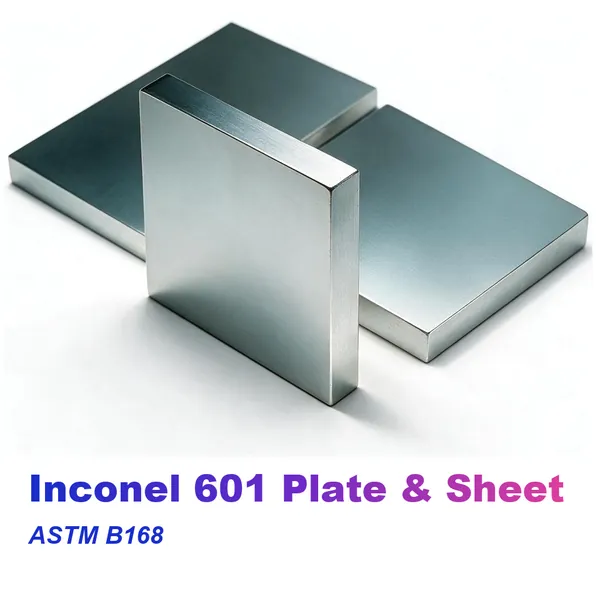
Inconel 601 plate, sheet, and strip covers UNS N06601 to ASTM B168 in the annealed condition, cut to your blank list. Gauges span 0.5 mm coil through 100 mm plate. Aluminium at 1.0-1.7% gives flat product an oxide scale that resists spalling in kilns, incinerators, and heat-treatment equipment. EN 10204 3.1 certificates and heat-level traceability accompany every delivery.
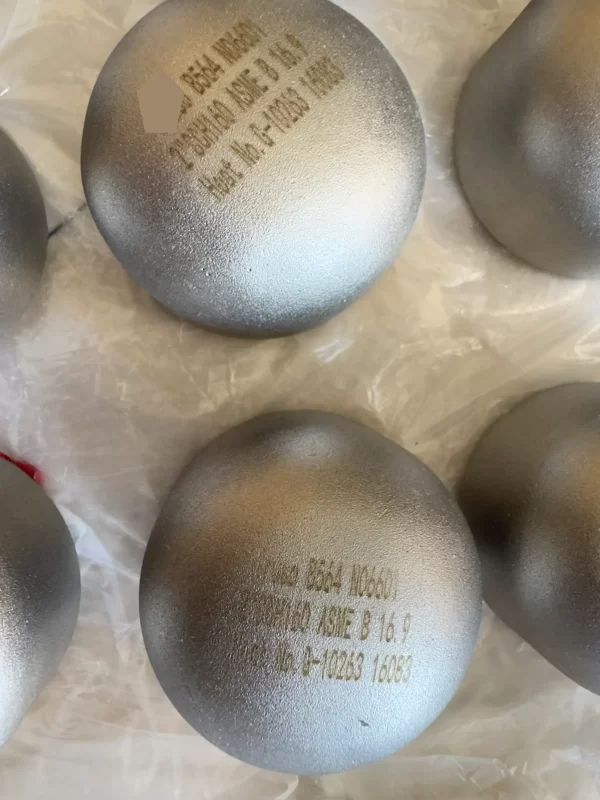
The alumina sub-scale survives repeated kiln cycles. As a result, plate faces do not shed oxide onto the workload.
Trays and liners resist carbon pickup. Conversely, plain heat-resistant plate absorbs carbon and cracks.
Hot-rolled plate, cold-rolled sheet, and strip all ship in the annealed condition under B168.
In addition, you source coil from 0.5 mm and plate to 100 mm under one enquiry.
Consequently, cold forming, spinning, and welding proceed without an aging or stress-relief step.
Annealed plate takes tight radii, which suits fabricated liners, shields, and ducting.
EN 10204 3.1 certificates carry the heat number, chemistry, and mechanical results for each plate.
Flat-product enquiries are handled commercially by Southerly Alloy and produced at audited partner plants that melt and roll the grade. Your requirement reaches the plate mill that will run it. Consequently, gauge, cutting, and documentation are settled in one exchange.
Specifically, we pick thickness and width from the bending or rolling step your shop runs next.
Next, plasma, waterjet, and shear profiling bring plate to the blank geometry you draw.
Also, we book ultrasonic testing, PMI, and third-party witness as the service requires.
Finally, the same commercial desk arranges packing method, Incoterm, and destination papers.
Flat 601 product passes through melt, hot rolling, cold rolling, and annealing before it is cut to size. In addition, the sequence shifts with the ordered gauge, standard, and acceptance level.
Nickel, chromium, and iron charge is melted to the N06601 window, with aluminium held inside its narrow band.
AOD or VOD treatment lowers carbon and sulphur. Next, ESR refines heats bound to critical service.
Afterwards, the mill reduces slabs to plate gauge on a schedule set for the ordered thickness.
Sheet and strip reach final gauge on cold mills, which improves tolerance and surface finish.
Then the line anneals material between 1100 and 1200 °C and cools it rapidly to set the oxide-forming structure.
Finally, leveling, cutting to size, and release follow the ordered acceptance level.
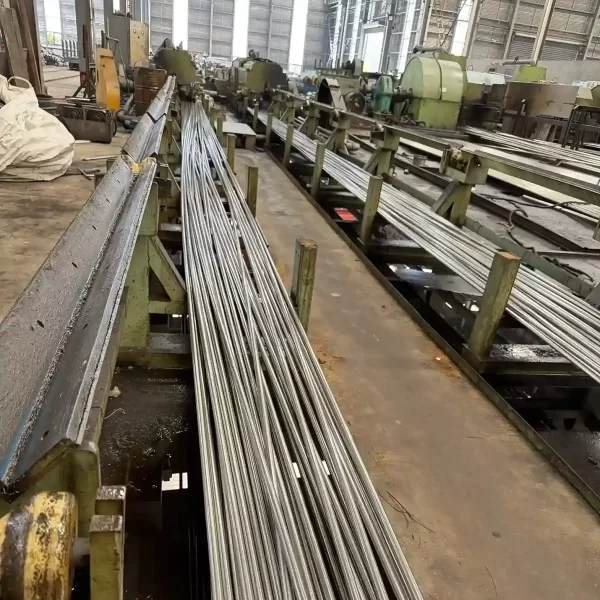
Hot-rolled plate and cold-rolled sheet in UNS N06601 are supplied from 0.5 mm through 100 mm. To begin with, we agree thickness, width, length, and edge condition before rolling starts. As a result, the plan confirmed at quotation is the plan that runs.
Rolling, annealing, and leveling halls serve the flat-product route.
Hot mills, cold mills, shears, and levelers share one quality system.
Plate and sheet output across standard and made-to-order gauges.
Our engineers answer gauge, condition, and cutting questions before you place the order.
First, we verify chemistry, mechanics, gauge, and surface on every batch before release. That work sits inside the ISO 9001 system. Above all, a mill certificate accompanies every delivery, and third-party inspection books onto the order when required.
Spectrographic analysis confirms the N06601 window, with aluminium recorded on the mill certificate.
Also, we measure mechanical values on the delivered gauge and condition.
In addition, we record thickness, flatness, and edge quality, and we add ultrasonic testing where specified.
The heat number on the certificate links every plate back to its melt.
Overall, four flat-product forms cover the UNS N06601 range, and each follows its own finishing route under ASTM B168.
Plate from 4.8 mm thick in annealed condition for furnace supports, liners, and shields.
Request Availability →Sheet from 0.5 to 6.35 mm with a smoother finish for fabricated equipment.
Request Availability →Similarly, strip and coil from 0.5 to 6.35 mm come slit to width for roll forming and stamping work.
Request Availability →Finally, we cut circles, rings, and profiled plate to your drawings from any stocked gauge.
Request Availability →We choose the flat product here for furnace and kiln service where scale must stay on the metal, not on the load. In return, thickness and blank size follow the structure being built rather than a pressure rating.
Discuss Your Application →Load-carrying fixtures that cycle between ambient and furnace temperature.
Shield panels that keep insulation out of the oxidizing gas path at 900 to 1100 °C.
Hangers and supports that hold furnace tubes in position through thermal cycling.
Likewise, ceramic kiln hardware must not shed oxide onto the fired product.
For example, incinerator plate and ducting take hot flue gas in waste-to-energy plants.
Vessels that shield reformer internals from the hot gas stream.
Support grids and internals for nitric acid production trains.
Flat shields and sheaths for sensors reading hot gas temperatures.
Detailed technical information including chemical composition, mechanical properties, standards and available dimensions.
The UNS N06601 window below applies across the B168 flat-rolled family. Aluminium stays within a tight 1.0–1.7% band since it controls scale formation. In addition, the purchase specification in force sets acceptance.
| Element | Content |
|---|---|
| Nickel (Ni) | 58.0–63.0% |
| Chromium (Cr) | 21.0–25.0% |
| Aluminium (Al) | 1.0–1.7% |
| Iron (Fe) | Balance |
| Carbon (C) | 0.10% max. |
| Manganese (Mn) | 1.00% max. |
| Silicon (Si) | 0.50% max. |
| Copper (Cu) | 1.00% max. |
| Sulphur (S) | 0.015% max. |
Minimum values below follow ASTM B168 for the annealed condition, which is the condition the standard lists for this grade. Therefore, confirm the ordered gauge and condition before acceptance.
| Product Form | Standard | Condition | Tensile Strength | Yield Strength, 0.2% Offset | Elongation |
|---|---|---|---|---|---|
| Hot-rolled plate | ASTM B168 | Annealed | ≥550 MPa (80 ksi) | ≥205 MPa (30 ksi) | ≥30% |
| Hot-rolled sheet and strip | ASTM B168 | Annealed | ≥550 MPa (80 ksi) | ≥205 MPa (30 ksi) | ≥30% |
| Cold-rolled plate and sheet | ASTM B168 | Annealed | ≥550 MPa (80 ksi) | ≥205 MPa (30 ksi) | ≥30% |
Aerospace AMS 5870 deliveries add condition-specific minimums and further process controls. Confirm the ordered condition at enquiry so the right standard is quoted.
| Property | Value |
|---|---|
| Alloy | Inconel 601 |
| UNS | N06601 |
| Werkstoff | 2.4851 |
| Density | Approx. 8.11 g/cm³ |
| Melting Range | Approx. 1360–1411 °C |
| Elastic Modulus | Approx. 206 GPa |
| Thermal Conductivity | Approx. 11.2 W/m·°C at 20 °C |
| Specific Heat | Approx. 450 J/kg·°C |
| Expansion Coefficient | Approx. 13.8 µm/m·°C (20–100 °C) |
| Alloy Type | Nickel-chromium-aluminium |
| Standard | Product / Application |
|---|---|
| ASTM B168 / ASME SB168 | Plate, sheet, and strip |
| ASTM B906 | General requirements for nickel alloy flat-rolled product |
| SAE AMS 5870 | Sheet, strip, and plate |
| DIN 17750 | Nickel alloy plate, sheet, and strip, W.Nr. 2.4851 |
| ISO 6208 | Nickel and nickel alloy plate, sheet, and strip |
| EN 10095 | Heat-resisting steels and nickel alloys |
| UNS N06601 · W.Nr. 2.4851 · NiCr23Fe · JIS NCF 601 | Designations |
ASTM International issues the flat-rolled documents. Besides, the ASME SB168 edition governs where a vessel falls under pressure-code jurisdiction.
| Product Form | Typical Supply Range | Length |
|---|---|---|
| Hot-rolled plate | 4.8–100 mm thick, widths to 2000 mm | Cut to length and width |
| Cold-rolled sheet | 0.5–6.35 mm thick, widths to 1500 mm | Cut to length and width |
| Strip and coil | 0.5–6.35 mm thick, slit to width | Coil or custom lengths |
| Cut blanks | Any stocked gauge | To customer drawing |
Gauges beyond the listed windows depend on slab and coil supply. Therefore, confirm gauge, width, edge finish, and condition at enquiry so the route can be priced accurately.
| Surface Condition | Typical Characteristics / Applications |
|---|---|
| Annealed & Pickled | Standard delivery for forming, welding, and fabrication |
| Bright Annealed | Scale-free surface for clean or visible service |
| Pickled Only | Acid-descaled finish for general industrial work |
| Mill Finish | Hot-rolled surface for parts machined after delivery |
Get detailed information including specifications, standards, dimensions and material properties.
A flat-product order normally ships two to four weeks after release, and heavy plate runs longer. We fix price only after we align thickness, condition, and cutting scope with your fabrication plan.
List thickness, width, length, quantity, and condition, plus the equipment the plate will serve.
B168 covers industrial plate, while AMS 5870 applies to aerospace gauges.
Annealed stock suits forming, and we agree blank geometry before rolling. Then the cutting plan locks in.
Price covers the rolling route, cutting, testing, and document scope, with the Incoterm stated.
Afterwards, we roll, anneal, and test plate to the level agreed at order placement.
Finally, plate leaves with 3.1 certificates, packing list, and the export document set.
Feedback from buyers and engineers who source nickel alloy materials from Southerly Alloy.
“Kiln tray plate arrived flat and cut to our blank list, and the aluminium figure on the certificate matched our incoming check.”
“Reformer insulation can sheet held its thickness across the whole order, so our rolling sequence never needed adjustment.”
“The ultrasonic records travelled with the plate, which turned incoming inspection into a document check instead of a re-test.”
Our production and inspection processes are certified to international standards, and every delivery ships with EN 10204 3.1 mill test certificates.
Quality Management System
Pressure Equipment Directive
Material Standards Compliance
Mill Test Certificates
You order flat-rolled 601 product to ASTM B168, which sits alongside B906 general requirements. Additionally, ASME SB168 applies under code jurisdiction.
Gauges run from 0.5 mm coil through 100 mm hot-rolled plate, cut to your length and width. Still, thicker sections depend on slab supply.
Flat product resists oxidation in air to roughly 1250 °C (2282 °F) under cycling. However, atmosphere, load, and support spacing decide the practical limit.
B168 lists annealed for this grade. For that reason, we quote as-rolled supply against a mill specification rather than the standard. Confirm the condition you need at enquiry.
Yes. Plasma, waterjet, and shear cutting produce blanks, rings, and circles from any stocked gauge.
A single plate or sheet covers most stocked gauges. Consequently, trial lots carry no premium hurdle.
FOB is the default Incoterm. Alternatively, EXW, CIF, and DAP quotes follow confirmed destinations.
We quote plate by weight in kilograms against the ordered gauge, width, and condition. The applicable Incoterm appears on every offer.
Standard gauges ship in 7-15 days. Meanwhile, we quote cut-to-size or heavy plate against the confirmed schedule.
Yes. Each delivery carries an EN 10204 3.1 certificate. Likewise, we can arrange third-party 3.2 endorsement on request.
Quote the thickness, width, length, and standard, plus the quantity required. We return price with the Incoterm attached, and cutting questions can ride along in the same message.