
800 vs 800H: Incoloy 800 Grades Comparison and Applications
A practical engineering comparison of Incoloy 800, 800H, and 800HT covering composition, high-temperature strength, corrosion resistance, and industrial applications in thermal and chemical environments.
1. Introduction to Incoloy 800 Grades
Incoloy 800 is a nickel-iron-chromium alloy designed for high-temperature structural applications. It is widely used in chemical processing, furnace equipment, heat exchangers, and power generation systems due to its excellent resistance to oxidation and carburization.
The Incoloy 800 series includes three closely related grades: Incoloy 800, Incoloy 800H, and Incoloy 800HT. These materials are frequently searched under terms such as 800 vs 800H, 800H vs 800HT difference, and nickel iron chromium alloy high temperature.
Although they share the same base chemistry, differences in carbon, aluminum, and titanium content lead to distinct high-temperature mechanical performance.
2. What is Incoloy 800?
Incoloy 800 (UNS N08800) is a solid-solution strengthened alloy composed mainly of nickel, iron, and chromium. It provides stable mechanical properties and good corrosion resistance in both oxidizing and carburizing environments.
It is commonly used in applications below approximately 600°C, including heat exchangers, process piping, and furnace components.
You can find material specifications and supply forms here: Incoloy 800 material.
Main characteristics of Incoloy 800
- Good oxidation and carburization resistance
- Stable austenitic structure
- Reliable mechanical strength at moderate high temperatures
- Good weldability and fabrication performance
3. Incoloy 800H: Improved High-Temperature Strength
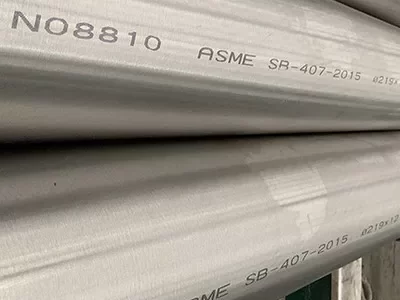
Incoloy 800H (UNS N08810) is an optimized version of Alloy 800 with controlled carbon content and restricted aluminum and titanium levels. These adjustments significantly improve creep rupture strength at elevated temperatures.
It is typically used in service conditions above 600°C where long-term structural stability is required.
Industrial supply forms include pipes, bars, and fittings such as Incoloy 800H products.
Main characteristics of Incoloy 800H
- Improved creep and stress rupture resistance
- Better long-term stability at high temperature
- Suitable for continuous thermal exposure
- Strong resistance to oxidation and carburization
4. Incoloy 800HT: Maximum Creep Resistance
Incoloy 800HT (UNS N08811) is a further refinement of 800H with tighter control of carbon, aluminum, and titanium content. This results in the highest creep rupture strength within the 800 series.
It is designed for extreme thermal environments such as ethylene furnaces, hydrocarbon cracking systems, and high-temperature pressure vessels.
For demanding chemical and thermal applications, products like Incoloy 800H and Incoloy 825 sheets and plates are often selected alongside 800HT depending on corrosion requirements.
Main characteristics of Incoloy 800HT
- Highest creep and stress rupture strength
- Excellent long-term thermal stability
- Suitable for continuous high-stress environments
- Optimized microstructure for extreme temperature service
5. Incoloy 800 vs 800H vs 800HT: Key Differences
The three grades share the same base alloy system but differ in controlled elements and heat treatment response, which directly affects high-temperature performance.
- Incoloy 800: General-purpose high-temperature corrosion resistance
- Incoloy 800H: Improved creep resistance and stability above 600°C
- Incoloy 800HT: Highest creep rupture strength for severe thermal conditions
Search demand for 800 vs 800H vs 800HT difference continues to increase due to widespread use in petrochemical furnaces and power generation systems.
6. Corrosion Resistance and High-Temperature Behavior
All 800 series alloys exhibit excellent resistance to oxidation, carburization, and nitriding environments.
They perform particularly well in alternating oxidizing and reducing conditions found in chemical processing and furnace operations.
Compared with standard stainless steels, Incoloy 800 grades maintain structural integrity at significantly higher temperatures and under long-term thermal stress.
7. Industrial Applications of Incoloy 800 Series
The Incoloy 800 family is widely used in industries requiring thermal stability and corrosion resistance.
- Chemical processing equipment
- Heat exchangers and boiler tubing
- Ethylene furnace systems
- Hydrocarbon cracking units
- Power generation components
- Industrial heating systems
These applications require materials that can maintain performance under continuous high-temperature exposure without deformation or failure.
8. Material Forms and Availability
Incoloy 800 series alloys are available in multiple product forms to meet different engineering requirements.
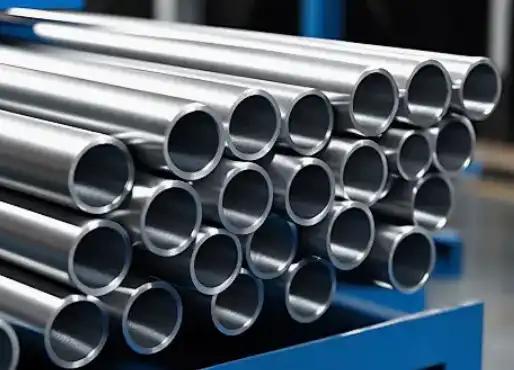
- Seamless pipes and tubes
- Sheets and plates
- Round bars and forgings
- Heat exchanger tubing
- Fasteners and fabricated parts
Material supply options such as Alloy 825 are also commonly used in corrosive environments where sulfuric and phosphoric acid resistance is required.
9. Conclusion
Incoloy 800, 800H, and 800HT are closely related nickel-iron-chromium alloys designed for high-temperature structural applications.
The main distinction lies in creep and stress rupture performance, with 800HT offering the highest level of long-term thermal stability.
Selection between these grades depends on operating temperature, mechanical load, and required service life.
With increasing demand in petrochemical, power generation, and high-temperature processing industries, the Incoloy 800 family remains a core material system for thermal engineering applications.